
Greater Vancouver Area Car Culture: Bridges, Rain, Strata Charging Politics, and One ICBC Renewal
Metro Vancouver is Canada's Pacific Rim car market — more than three million people, bridge-shaped commutes, some of the country's highest pump prices, and purchase math that starts with strata parking and winter tires for Whistler. This guide maps Vancouver proper, Richmond, Burnaby, Surrey, the Tri-Cities, and the North Shore with census, ICBC, TransLink, and highway data you can verify.
The Vancouver census metropolitan area held an estimated 3.11 million people as of July 2025 (Statistics Canada) and recorded a 27.3-minute average one-way commute in the 2021 Census. About three in four workers with a usual workplace still drive. Bridges, rain, strata charging, and pump prices matter as much as badge.
Community context
The 2021 Census counted 1.42 million visible-minority residents in Vancouver CMA private households — 54.5% of responses — with large Chinese, South Asian, Filipino, Korean, and West Asian communities across Richmond, Burnaby, Surrey, and Coquitlam. Automotive decisions sit at the intersection of multigenerational household needs, YVR airport duty, ICBC Optional coverage, and bridge-timed commutes.
Key numbers for GVA car buyers
- Vancouver CMA population
- ~3.11 million
- Statistics Canada estimated 3,108,941 people in the Vancouver census metropolitan area on July 1, 2024, and reported +0.2% growth to July 1, 2025 — Canada's third-largest CMA after Toronto and Montréal.
- Average one-way commute
- 27.3 min
- 2021 Census average commuting duration (all modes) for the Vancouver CMA — shorter than Toronto's 29.8 minutes, still long enough that comfort and reliability matter on rainy Highway 1 mornings.
- Drive to work
- 74.7% by car
- Share of employed Vancouver CMA workers with a usual workplace who commuted by car, truck, or van in 2021 — 68.1% as drivers and 6.6% as passengers (978,560 workers in the commuting universe).
- 60+ minute commutes
- 8.2%
- 79,825 Vancouver CMA workers reported one-way commutes of 60 minutes or more in 2021 — enough volume that adaptive cruise, seat comfort, and fuel or electricity cost become real purchase criteria.
- Visible minority population
- 54.5%
- 1.42 million of 2.61 million people in private-household responses in the Vancouver CMA reported visible minority status in 2021 — Chinese (512,260) and South Asian (369,295) were the two largest groups.
- ICBC average premium
- $1,358/yr
- ICBC's published average Autoplan premium for fiscal 2024/25 (based on premiums earned) — a provincial benchmark, not a Metro Vancouver quote. Optional coverage, vehicle value, and driving record still move your number.
- Port Mann weekday traffic
- ~179,000/day
- North Shore municipal reporting cited about 179,000 average weekday crossings on the ten-lane Port Mann Bridge in 2025 — the region's highest-volume Fraser River crossing. Lions Gate carried about 56,000–57,000 vehicles per day on a three-lane span.
- Median household income
- $90,000
- 2020 Census median total household income in the Vancouver CMA — context for payment math, not a spending recommendation. Couple-with-children economic families median was $141,000.
What driving actually feels like here
The Greater Vancouver Area is not one market. It is a Lions Gate queue into Stanley Park traffic, a Richmond airport loop in the rain, a Surrey Highway 1 crawl toward Port Mann, and a North Shore hill that teaches you why AWD marketing exists. Locals organize around bridges and municipalities — Burnaby is not West Vancouver, and neither is downtown Yaletown.
Statistics Canada counted 2.64 million people in the Vancouver CMA in 2021 and estimated just over 3.1 million by July 2024, with only +0.2% growth to July 2025 after a sharp slowdown in non-permanent resident arrivals. More people still means more demand for the same crossings. Port Mann weekday volumes near 179,000 vehicles and Lions Gate daily counts in the mid-50,000s on three lanes explain why a five-kilometre map distance can become a forty-minute commute.
Commuting data explains why comfort and reliability beat badge theater for most buyers. The 2021 Census put Vancouver's average one-way commute at 27.3 minutes — second among Canada's three largest metros — with 8.2% of workers reporting 60 minutes or more each way. About three in four workers with a usual workplace still drove. TransLink recorded 404.2 million boardings in 2024 and 396.4 million in 2025 — meaningful for buyers who can pair SkyTrain or West Coast Express with one household car instead of two.
Fuel and insurance land differently than in most U.S. metros. Metro Vancouver regularly posts some of Canada's highest regular gasoline prices — often near or above $2 per litre when national averages sit much lower — so hybrid efficiency shows up every fill-up. ICBC's published average Autoplan premium was $1,358 in 2024/25; that is a provincial average, and Metro Vancouver quotes with Optional coverage still deserve a bindable estimate before anyone talks payment.
Demographics shape what shows up in driveways. The 2021 Census counted 1.42 million visible-minority residents in Vancouver CMA private households — 54.5% of responses — with large Chinese, South Asian, Filipino, Korean, and West Asian communities across Richmond, Burnaby, Surrey, Coquitlam, and East Vancouver. Multigenerational households and YVR airport duty (26.9 million passengers in 2025) push many families toward three-row crossovers and hybrids rather than sedans.
Badge conversation exists but often loses to geography. Toyota, Honda, Lexus, Hyundai, and Kia still dominate family approval conversations; Tesla, Polestar, and Genesis appear when strata charging, ICBC Optional math, and Sea-to-Sky winter tires are already solved. A loaded RAV4 Hybrid or CR-V often beats a base luxury lease once fuel, parking, and a Whistler-capable tire set enter the conversation.
Bridges, highways, and transit that shape your purchase
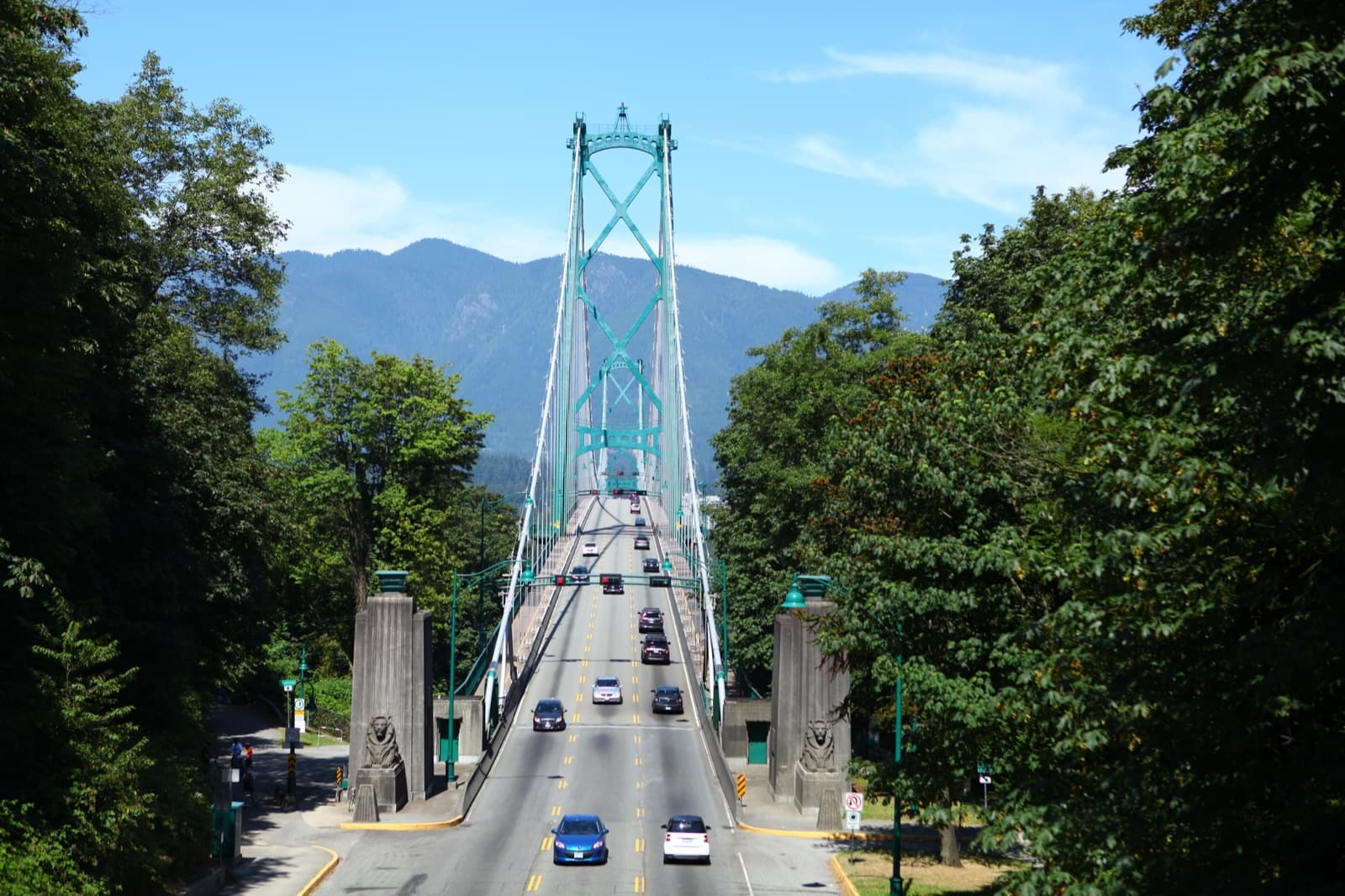
Bridges are the spine. Lions Gate (Highways 99/1A) links Vancouver to the North Shore with roughly 56,000–57,000 vehicles per day on three lanes and a reversible centre lane. Ironworkers Memorial Second Narrows carries about 130,700 vehicles per day and the highest per-lane pressure among major crossings. Port Mann on Highway 1 moves about 179,000 weekday vehicles across ten lanes — freer per lane than Ironworkers, still a daily timing decision for Surrey and Tri-Cities buyers.
Highway 1 (Trans-Canada), Highway 99 (Sea-to-Sky and south to the border), Highway 91, and Highway 17 set weekend personality. Sea-to-Sky grades and winter tire or chain rules matter for Whistler households even when downtown streets stay rain-slick rather than snow-covered. The George Massey Tunnel and Alex Fraser Bridge define Delta and South Surrey routing into Richmond and Vancouver.
TransLink is changing the two-car calculus slowly. SkyTrain Expo, Millennium, and Canada Line corridors, RapidBus routes, SeaBus, and West Coast Express give some condo and townhouse households a real one-car option. System boardings hit 404.2 million in 2024 before easing to 396.4 million in 2025 as regional population growth slowed — still among Canada's densest transit markets per capita, not a free pass on parking height or school-run cargo.
YVR on Sea Island is the region's cargo and family test. Regular pickup duty rewards sliding doors, flat load floors, and wet-weather tires — not low-profile sport sedans. Peace Arch / Douglas and Pacific Highway crossings into Washington State add a second geography: NEXUS timing, fuel-price arbitrage, and Seattle weekend traffic belong in any Surrey or Richmond household spreadsheet.
How the metro breaks down for drivers
Metro Vancouver locals identify by municipality and bridge more than by a single downtown. Parking height, strata EV rules, and commute vectors differ block by block — these modules are editorial starting points, not rankings.
Downtown Vancouver (CBD, Coal Harbour, Yaletown)
Dense towers, paid parking, and the highest parking fees in the region. Many households treat a car as secondary to SkyTrain and walking.
- ·Compact hybrids and EVs beat full-size SUVs in garage height and monthly parking
- ·Strata EV charging requires board and electrical capacity approval — solve building access before you buy electric
- ·Insurance plus parking often rival finance payments for young professionals
West End & Stanley Park fringe
Older apartment stock, tight street parking, and Lions Gate approach traffic that rewards patience over horsepower.
- ·Short wheelbases survive laneway and underground ramps better than three-row SUVs
- ·Car-share and transit reduce ownership need for some households
- ·First luxury purchases often lose to parking math plus Optional ICBC coverage
Mount Pleasant, Olympic Village & False Creek
Younger households, Canada Line adjacency, and condo density with competitive visitor parking rules.
- ·Compact crossovers and hatchbacks dominate underground stalls
- ·Workplace or public Level 2 often decides EV feasibility
- ·Weekend Sea-to-Sky trips still push many buyers toward AWD hybrids
Kitsilano, Point Grey & UBC approach
Hills, rain, university traffic, and some of the city's tighter residential parking patterns.
- ·AWD crossovers popular for wet grades without needing a Whistler-only truck
- ·Hybrid efficiency matters when pump prices sit near national highs
- ·Campus and hospital shift work rewards reliable cold-start manners in November rain
East Vancouver (Commercial Drive, Hastings-Sunrise, Renfrew)
Street parking permits, shorter SkyTrain access than the suburbs, and growing family density.
- ·Compact SUVs and wagons balance street parking and weekend cargo
- ·Highway 1 access via Cassiar or Boundary defines rush-hour routing
- ·Second-car households common when one partner works downtown or at YVR
Richmond
Sea Island airport access, Canada Line, high-rise condo density, and among the region's highest Chinese Canadian population shares (2021 Census).
- ·YVR pickup capability matters more here than almost anywhere else in the CMA
- ·Strata charging politics are the primary EV constraint — not highway range
- ·Compact luxury and hybrid crossovers are common; measure garage height before you fall for a badge
Burnaby (Metrotown, Brentwood, SFU)
SkyTrain-oriented towers, Lougheed and Highway 1 access, and strong Chinese and Korean Canadian communities.
- ·Condo EV readiness varies tower by tower — ask for load studies, not marketing slides
- ·Hybrid RAV4 / CR-V / Tucson density is high along Lougheed corridors
- ·SFU and Metrotown parking punish oversized three-row SUVs daily
Surrey (City Centre, Guildford, Newton, Cloverdale)
Fast-growing South Asian communities, Highway 1 and 99 access, and longer suburban arterials than Vancouver proper.
- ·Three-row SUVs and minivans for multigenerational households are common
- ·Port Mann timing defines many downtown Vancouver job commutes
- ·Peace Arch weekend runs reward fuel efficiency and NEXUS planning
South Surrey & White Rock
Border proximity, more detached housing, and a different congestion profile than Surrey City Centre.
- ·Cross-border shopping and Seattle weekends are part of ownership math
- ·Driveway homes simplify EV adoption versus tower strata
- ·Highway 99 wet-weather manners matter more than downtown parking height
Tri-Cities (Coquitlam, Port Coquitlam, Port Moody)
Millennium Line expansion, Highway 1 and 7 corridors, and family-oriented suburbs with mountain weekend access.
- ·West Coast Express and SkyTrain can shrink the second-car need near stations
- ·AWD hybrids for Coquihalla and Sea-to-Sky shoulder seasons
- ·School-run and Costco cargo often beat sport-sedan fantasies
North Vancouver
Steep streets, Lions Gate and Ironworkers dependence, and outdoor-gear cargo as a lifestyle default.
- ·AWD and wet-traction tires matter more than badge prestige
- ·Lions Gate queues punish unreliable start-stop drivetrains emotionally
- ·Compact crossovers fit hillside street parking better than full-size SUVs
West Vancouver & North Shore hills
Higher household incomes, steep driveways, and Sea-to-Sky access that turns weekend skiing into a tire conversation.
- ·Premium crossovers and EVs appear when driveway Level 2 is already solved
- ·Winter tire or chain rules apply once you leave coastal mildness for mountain highways
- ·ICBC Optional coverage on luxury trims still deserves a quote before the lease sheet
New Westminster & Queensborough
Compact urban core, SkyTrain access, and bridge/tunnel adjacency to Richmond and Burnaby job centers.
- ·Smaller footprints win in older underground parks
- ·Hybrid efficiency helps when every trip crosses a tolled-in-time bridge
- ·One-car-plus-transit households are realistic near Columbia and 22nd Street stations
Delta, Tsawwassen & Ladner
Massey Tunnel and Highway 17 routing, ferry access to Vancouver Island, and more house-for-the-money than Vancouver proper.
- ·Tunnel timing defines morning reliability into Richmond and Vancouver
- ·Ferry weekends reward cargo space and fuel planning
- ·Detached driveways make home charging easier than Richmond high-rises
Langley City & Township
Eastern Highway 1 growth, more land for multi-car households, and longer average trips into Burnaby or Vancouver jobs.
- ·Fuel cost and adaptive cruise matter on 40–60 minute one-way days
- ·Three-row SUVs common for sports gear and multigenerational visits
- ·Compare hybrid ownership cost honestly against pump prices that lead Canada
Maple Ridge & Pitt Meadows
Pitt River Bridge access, Golden Ears corridor growth, and outdoor weekend identity.
- ·AWD crossovers for rain, gravel shoulders, and mountain approaches
- ·Longer commute distances reward efficiency over horsepower
- ·Two-car households common when transit options thin out
Seasonal ownership reality
Rain season (October to March)
- ·Lower Mainland winters are more rain and spray than Toronto-style snow — wet brakes, fogged glass, and hydroplaning matter more than deep powder in Vancouver proper
- ·B.C. requires winter tires or chains on most signed mountain highways from October 1 to April 30 (some routes end March 31); M+S is the legal minimum, 3PMSF is the smarter Sea-to-Sky choice
- ·Coastal mildness does not cancel Whistler rules — if your household ski weekends leave the Lower Mainland, equip for the highway signs, not the downtown forecast
- ·All-wheel drive helps traction in rain but does not replace adequate tread depth
Summer (May to September)
- ·Whistler, Vancouver Island ferries, and Okanagan weekend traffic define road-trip planning — see our Vancouver–Whistler and Vancouver–Kelowna guides for timing
- ·Construction and tourist volume on Highway 99 and Highway 1 add unpredictable delays; leave buffer for YVR pickups
- ·Cross-border Seattle runs peak on long weekends — check Peace Arch and Pacific Highway wait times before you leave Surrey
Shoulder seasons
- ·Spring pothole and gravel season punishes low-profile sport tires after winter rain cycles
- ·Fall tire-change appointments book early for households that keep a dedicated mountain set
- ·Used-market timing: convertibles soften as rain returns; AWD crossovers firm up before ski season
Common GVA purchase scenarios
New grad in Burnaby with parents co-signing
ICBC's provincial average premium ($1,358 in 2024/25) looks gentler than FSRA's GTA benchmarks, but young drivers with Optional coverage and a downtown parking stall still feel the hit. A used Corolla, Civic, or Kona Hybrid with honest rain tires often survives household approval better than a base luxury lease — run our affordability calculator with a bindable ICBC quote, not a hopeful one.
Richmond family replacing a three-row SUV
YVR cargo, wet-weather confidence, and third-row access beat horsepower. Compare Toyota Highlander Hybrid, Honda Pilot, Kia Sorento, and Hyundai Palisade before paying Lexus or BMW badge premium. CPO with remaining warranty is common in this corridor.
Surrey Highway 1 commuter (80+ km daily)
Comfort, adaptive cruise, and fuel cost dominate when Port Mann timing already owns your morning. Metro Vancouver pump prices regularly lead Canada — a hybrid crossover often beats a thirsty V6. Add realistic kilometres to our commute cost calculator.
Downtown condo owner considering first EV
Strata approval and electrical capacity decide the answer before range does. BC Hydro reports about 98% renewable generation, so the electrons are clean when you can charge — but the building still has to say yes. Read our condo charging guide and run public vs home charging math before you order.
North Shore household with Whistler weekends
AWD helps on wet grades; winter tires or chains are the legal and practical requirement once Sea-to-Sky signs apply. Size cargo for skis and groceries. An efficient hybrid SUV with a dedicated mountain tire set often beats a performance SUV that sits at Lions Gate anyway.
Tri-Cities buyer near SkyTrain or West Coast Express
Transit recovery (TransLink's ~400 million annual boardings) enables one-car households near stations. Size the remaining car for weekend family duty and school runs, not daily peak-hour Highway 1 misery.
South Surrey cross-border shopper
Peace Arch waits, currency, warranty coverage, and B.C. registration differ from a Bellingham dealer's pitch. A U.S. sticker price is not a deal if service, recall coverage, and ICBC become a part-time job — see our Seattle–Vancouver road trip guide for corridor timing.
First luxury purchase in West Vancouver
Household approval and Optional ICBC coverage matter as much as badge. CPO Lexus RX or Genesis GV70 with warranty often beats a new German entry once tires, parking, and year-three costs are included — see our first luxury car guide.
EVs in GVA strata and townhouses
Richmond high-rises, Burnaby Metrotown towers, and downtown Vancouver underground parks are where EV dreams meet strata bylaws. Townhouses and detached homes in Surrey, Langley, Delta, and parts of the North Shore simplify Level 2 installs. The car is rarely the hard part — the building is.
BC Hydro reports that about 98% of its electricity comes from renewable sources, so home charging here is among the cleanest in North America when you can plug in. Provincial CleanBC passenger vehicle rebates have paused and restarted in cycles; federal EVAP eligibility and any current SCRAP-IT or charger incentives still need a same-week check before you sign. None of those programs install a strata charger for you.
Public DC fast charging along Highway 1, Highway 99, and retail plazas improves each year, but daily EV ownership for condo dwellers still depends on workplace charging, reliable Level 2 at home, or accepting public charging as a chore. Run our public vs home charging calculator with your actual BC Hydro rate.
Winter range loss on cold Sea-to-Sky mornings is measurable even when downtown stays above freezing — plan buffer for Whistler weekends. PHEV crossovers remain popular with buyers who cannot solve strata charging but want partial electric miles for school and grocery loops.
What to carry into the showroom
The best GVA car is the one your household still trusts after a Lions Gate queue in November rain, a YVR pickup with four suitcases, and an ICBC renewal that matches a bindable quote — not your optimism.
Start with municipality and bridge: downtown towers face different math than Surrey families or North Shore hill households. Quote ICBC on the exact trim. Budget wet-weather and mountain tires for the highways you actually drive. Run commute and affordability calculators with realistic litres and parking fees.
Compare the loaded mainstream alternative honestly — a RAV4 Hybrid or CR-V with money left for tires often beats a stretched luxury lease in this market. If the premium still earns its price after passengers, strata rules, and year-three costs, you have a defensible Metro Vancouver car.
Related guides
- Vancouver to Whistler Road Trip
- Seattle to Vancouver Road Trip
- Vancouver to Kelowna Road Trip
- Pacific Northwest Region Guide
- Best EVs for Condo Living
- Charging at Condos and Apartments
- Best Cars for Multigenerational Households
- First Luxury Car Guide
- Commute Cost Calculator
- Car Affordability Calculator
- Public vs Home Charging Calculator
- Hybrid vs EV Monthly Calculator
- EV vs Gas Road Trip Calculator
- Canada Recall Watch
Driving patterns
- ·Bridge and tunnel commutes — Port Mann ~179,000 weekday vehicles; Lions Gate mid-50,000s/day on three lanes
- ·TransLink paired with one household car where SkyTrain or West Coast Express fit (~400M annual boardings)
- ·Weekend trips to Whistler, Vancouver Island, the Okanagan, and Seattle
- ·Wet-weather driving with mountain winter tires or chains when Sea-to-Sky signs apply
- ·Multi-car households: efficient commuter plus three-row family vehicle
Likely vehicle needs
- ·Wet-traction tires in the Lower Mainland; winter tires or chains for signed mountain highways (Oct 1–Apr 30 on most routes)
- ·Fuel efficiency or home charging when Metro Vancouver pump prices lead Canada
- ·YVR cargo and car-seat duty — 26.9 million airport passengers in 2025
- ·ICBC quotes on the exact trim before payment math — provincial average Autoplan premium $1,358 (2024/25)
On the road here
EV and hybrid fit
BC Hydro reports about 98% renewable generation, which favors EVs when you can charge. Strata approval in Richmond, Burnaby, and downtown towers remains the primary constraint. Provincial passenger rebates pause and restart — verify current CleanBC, EVAP, and charger programs before you buy.
Luxury and status signals
Lexus, Genesis, BMW, Mercedes-Benz, Tesla, and Polestar appear in West Vancouver, Richmond, and Burnaby driveways — but ICBC Optional coverage, parking height, and mountain tire costs filter many first luxury purchases toward CPO Japanese entries.
Family and multigenerational considerations
Multigenerational households in Surrey, Richmond, and the Tri-Cities drive three-row SUV demand. Median Vancouver CMA household income was $90,000 in 2020 (Census) — payment math must survive fuel and parking, not just MSRP.
Road trip ideas
Related buying guides
Best EVs for Condo and Apartment Living
Practical framework for shoppers in this region.
Best Cars for Multigenerational Households
Practical framework for shoppers in this region.
First Luxury Car Guide
Practical framework for shoppers in this region.
Vancouver to Whistler Road Trip
Practical framework for shoppers in this region.
Seattle to Vancouver Road Trip
Practical framework for shoppers in this region.
EV and hybrid guides
Relevant Drive Notes
Rivian’s 2027 R1S Finally Gets Second-Row Captain’s Chairs
The 2027 R1S adds optional second-row captain’s chairs with a center pass-through, Rivian’s most-requested interior feature since launch. The R1 lineup also moves to Premium, Performance, and Quad trims, with starting prices of $83,990 for the R1S and $79,990 for the R1T.
PolicyThe World Already Chose Electric Cars. America Is Still Arguing
Elsewhere, electric cars already feel normal. In the U.S., they still feel like an argument. The International Energy Agency’s latest outlook shows why that gap is about policy and price, and why the destination is still electric.
Car CultureAn American Won the Freedom 250. The National Mall Was Already a Set.
Kyle Kirkwood led 128 of 147 laps and gave the Freedom 250 the American winner its pageantry demanded. Before the green flag there was a presidential parade lap, six branches of military flyovers, and a National Gallery that had boarded up its skylights just in case.