
Orange County Car Ownership: The Freeway, Toll, Charging, and Family Math
Orange County is one county but several ownership markets. The useful car is the one that can absorb school pickup, an I-5 commute, an airport run, and a crowded weekend without making tolls, energy, insurance, and parking invisible.
Key numbers for Orange County Car Ownership: Tolls, Freeways, Charging, and Family Routines
- County population
- 3,149,507
- U.S. Census Bureau estimate for July 1, 2025, across Orange County's 34 cities and unincorporated communities.
- Fee-paid vehicles
- 2,983,348
- California DMV estimate for calendar 2025, including 2.37 million automobiles plus trucks, motorcycles, and trailers.
- I-5 daily traffic
- 275,600+
- OCTA's count of motorists using the I-5 segment between I-405 and SR-55 each day.
- John Wayne passengers
- 11.37 million
- Passengers handled in 2025, up 2.5% from 2024 according to John Wayne Airport.
- Anaheim Resort visitors
- 25 million+
- Visitors in a typical year to the resort district, which also supports more than 30,000 workers.
- Toll-road network
- 4 state routes
- SR-73, SR-133, SR-241, and SR-261 form California's largest toll-road network and about one-fifth of Orange County's highway system.
- Housing units
- 1,167,032
- Census estimate for July 1, 2025; the 2020–2024 owner-occupied housing rate was 56.4%.
- Completed I-5 work
- 6.5 miles
- OCTA completed the South County improvements between SR-73 and El Toro Road in 2025.
- Vietnamese residents (OC)
- 241,557
- 2020 Census detailed Asian-origin count for Orange County — the largest Vietnamese population of any U.S. county. The Little Saigon commercial and residential corridor centers on Westminster, Garden Grove, Fountain Valley, and parts of Santa Ana.
One county, several different ownership routines
Orange County car ownership is rarely defined by one commute. A household may send one adult toward Costa Mesa or Irvine in the morning, make a school run in the opposite direction, collect groceries after practice, and still need enough flexibility for a late John Wayne Airport pickup. Annual mileage does not show those calendar conflicts. Before adding a second car, map the overlapping hours when two people genuinely need separate vehicles and price that solution against insurance, registration, parking, maintenance, and depreciation.
The county's July 1, 2025 population estimate was 3,149,507, while the DMV estimated nearly 2.98 million fee-paid vehicles during the year. Those figures are not a one-car-per-resident ratio—the registration total includes trucks, motorcycles, and trailers—but they show why freeway congestion and parking demand are structural. Orange County also exchanges large numbers of workers with Los Angeles, Riverside, and San Bernardino counties, so traffic does not neatly follow county lines or a single downtown-oriented rush hour.
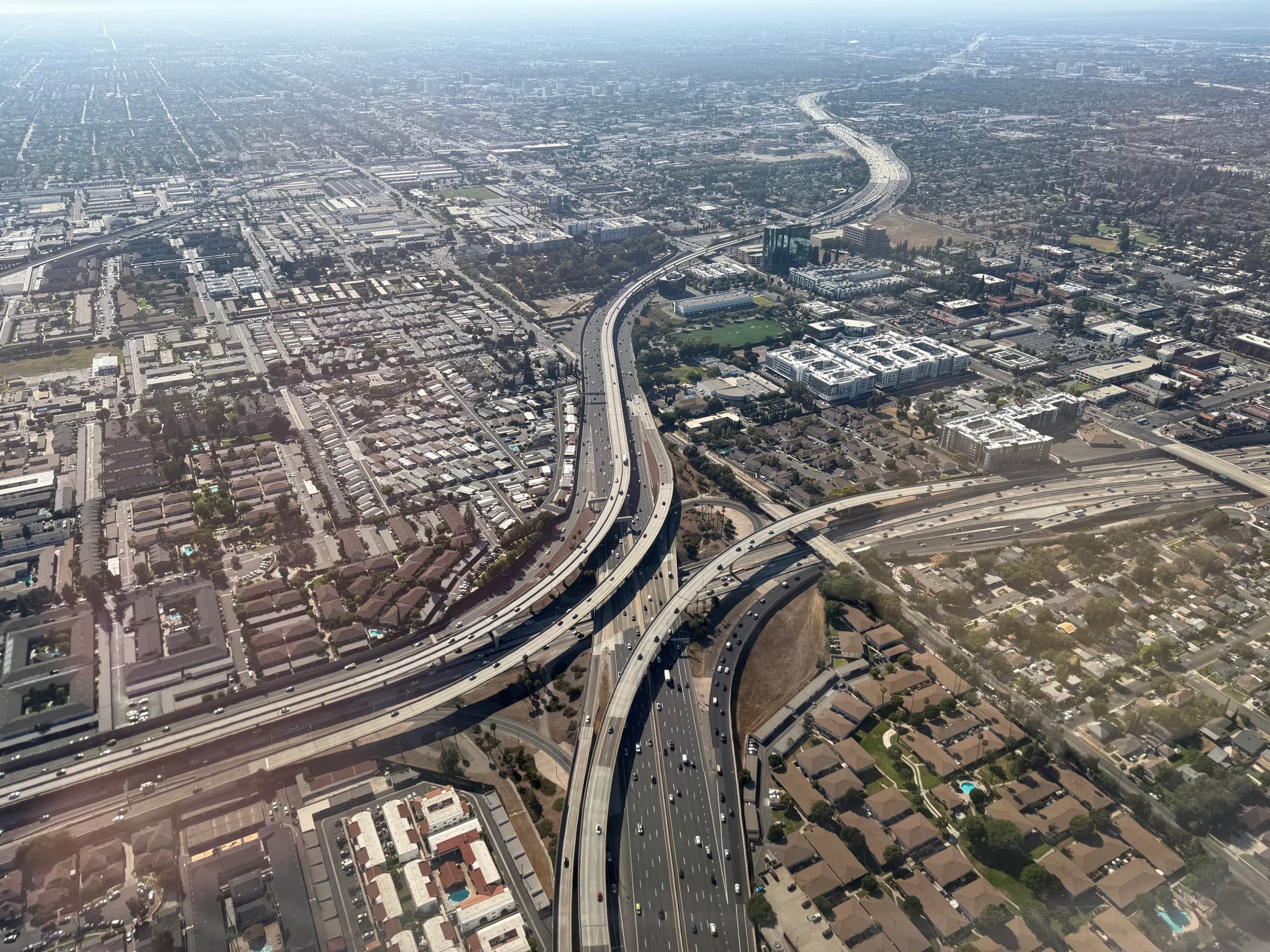
I-5 is the central spine through Anaheim, Santa Ana, Tustin, Irvine, Lake Forest, Mission Viejo, and San Juan Capistrano. I-405 carries a different mix of coastal, employment, and Los Angeles County traffic through Irvine, Costa Mesa, Fountain Valley, Westminster, and Seal Beach. SR-55, SR-57, and SR-91 move drivers across those north–south spines. A route that looks short on a map may include a difficult interchange, a school-zone arterial, and a freeway segment where an incident changes the entire household schedule.
Vehicle choice should begin with the most demanding repeated task, not the most photogenic occasional one. A compact hybrid can be more useful than a large SUV for a long freeway commute and a tight apartment garage. A minivan earns its footprint when sliding doors and three usable rows solve weekly passenger duty. An EV is easy to live with when it charges predictably while the household sleeps or works; without that dependable anchor, public charging becomes another appointment competing with school, work, and family time.
Little Saigon deserves its own ownership lens without becoming a brand stereotype. The 2020 Census counted 241,557 Vietnamese residents in Orange County — the largest such concentration of any U.S. county — with the commercial heart along Bolsa Avenue in Westminster and dense household presence in Garden Grove, Fountain Valley, and nearby Santa Ana. Weekend plaza parking at Asian Garden Mall (Phước Lộc Thọ) and Bolsa corridor markets rewards short wheelbases and cameras as much as badges. Multigenerational airport and temple weeks reward third-row access. Parent-approved first luxury often means a CPO Lexus RX or ES ladder more than a lease payment that survives Instagram but not insurance — and plenty of households still run a stock RAV4 Hybrid or Odyssey because the spreadsheet wins. Demographics explain destinations and trip chains; they do not prescribe one driveway.
Run the numbers with exact insurance quotes and actual routes. Orange County households can face meaningful differences between a base and performance trim, between a sedan and three-row crossover, or between charging at home and paying public fast-charging prices. The commute-cost, total-cost-of-ownership, hybrid-versus-EV, and public-versus-home-charging calculators make those differences visible before a dealership payment discussion narrows the decision.
Freeways and toll lanes are time tools, not fixed promises
OCTA completed 6.5 miles of I-5 South County improvements in 2025, adding or extending lanes and rebuilding interchanges between SR-73 and El Toro Road. A separate project now affects nearly nine miles between I-405 and SR-55 through Irvine and Tustin. OCTA reports more than 275,600 daily motorists on that segment and schedules construction into the end of the decade. Closures and ramp configurations will move as work advances, so current OCTA alerts and Caltrans QuickMap are more useful than a permanently stated shortcut.
SR-73, SR-133, SR-241, and SR-261 use all-electronic collection. Rates depend on distance, time, vehicle axles, and payment method. FasTrak account holders receive the lowest listed rates; an infrequent driver without an account can generally pay online within five days before or after the trip. Treat a toll as a priced option. Paying occasionally to protect a daycare closing time or flight pickup can be rational, while defaulting to the same toll twice every weekday can quietly become a substantial annual ownership expense.
The 405 Express Lanes are a separate OCTA facility with their own entry points, toll schedule, and occupancy rules. Every vehicle needs a valid FasTrak transponder, and a switchable transponder is necessary to claim applicable carpool treatment. Rates are managed to maintain traffic flow and can change by direction, segment, hour, and periodic review. The sign visible at entry—not an old article or a remembered opening price—is the relevant number.
Park-and-ride facilities can help households pair one car with a carpool or transit trip, but rules vary. Caltrans District 12 permits up to 72 hours only at lots marked for overnight use and warns that the lots do not have full-time security. Construction can also reduce capacity. A park-and-ride plan therefore needs a current facility check and the same common-sense security precautions as any unattended parking area.
How Orange County breaks down for drivers
These are ownership patterns, not rankings or assumptions about every resident. Housing type, workplace, school schedule, and charging access matter more than the city name on a mailing address.
Anaheim, Orange, and the northern I-5 corridor
I-5, SR-57, SR-91, the Orange Crush, resort traffic, and large employment flows make this a multi-directional driving environment.
- ·Check Anaheim Public Utilities programs separately from SCE or community-choice offers
- ·Resort event calendars can change Harbor, Katella, Ball, and Disneyland Drive travel times
- ·A compact exterior and good outward visibility help in both older neighborhoods and crowded structures
Santa Ana, Tustin, and central Orange County
Central access is excellent on paper, but I-5/SR-55 construction, older street grids, and airport-adjacent traffic create localized pressure.
- ·Follow current I-5 construction notices instead of relying on a habitual ramp
- ·Price parking and security needs for households without a private garage
- ·John Wayne Airport duty rewards easy luggage loading more than a third row used twice a year
Irvine and the Irvine Business Complex
Master-planned arterials, employment centers, new housing, and a mix of garages and multifamily parking create very different EV experiences within one city.
- ·A private garage makes scheduled home charging straightforward; a shared garage requires written permission and a real installation path
- ·School and activity loops across large arterials can matter more than freeway mileage
- ·The I-5 project between I-405 and SR-55 remains an update-sensitive part of local travel
Little Saigon (Westminster, Garden Grove, Fountain Valley)
Orange County's Vietnamese American commercial and household core — Bolsa Avenue plazas, Asian Garden Mall weekend peaks, I-405 and SR-22 access, and multigenerational trip chains that do not look like an Irvine tech commute.
- ·Plaza and Bolsa corridor parking rewards shorter wheelbases, good cameras, and patience more than a wide three-row flexed for one Costco run
- ·CPO Lexus RX/ES and Acura MDX density is visible as a parent-approved luxury ladder — not universal; hybrids and minivans remain common family tools
- ·SNA and LAX pickup weeks with elders favor easy step-in height and sliding doors over sport-sedan clearance
- ·Sibling splits are real: one household may keep a stock hybrid daily and a cleaned-up older Japanese sedan for meets — price insurance on both before romanticizing either
Costa Mesa and Seal Beach
I-405 coastal and employment traffic, beach visitor peaks, and denser multifamily parking than inland planned communities.
- ·A switchable FasTrak transponder matters if the household legitimately qualifies for Express Lane occupancy benefits
- ·Shorter vehicles are easier in busy retail and beach-adjacent lots without sacrificing commute comfort
- ·Public fast charging should be a backup even when the map shows many ports
Newport Beach, Laguna Beach, and the coastal corridor
Coastal parking, event traffic, visitor peaks, hills, and salt exposure make footprint and parking location important ownership details.
- ·Measure the home or assigned space before choosing a wide SUV
- ·Rinse salt residue and inspect paint chips rather than buying capability the household does not use
- ·SR-73 can buy predictability for selected trips but belongs in the monthly budget
Lake Forest, Mission Viejo, Laguna Niguel, and South County
Longer suburb-to-suburb routines, planned communities, and regular I-5 use make reliability and household scheduling central.
- ·Home charging can suit detached-home routines, but HOA and electrical-panel details still need confirmation
- ·Car-seat access, cargo shape, and rear-seat comfort deserve an in-person family test
- ·An occasional toll-road strategy can be cheaper than oversizing the household fleet
Rancho Santa Margarita and eastern planned communities
Trips frequently use arterials and the 241 rather than a simple grid, so distance and backup routing deserve extra margin.
- ·Keep a defined toll budget instead of treating every 241 trip as incidental
- ·A hybrid can reduce fuel use without making public charging part of the schedule
- ·Wildfire readiness belongs in the household plan even though seasonal hazards are covered in a separate guide
Recurring traffic and ownership moments
School and activity weeks
- ·Test the actual rear door opening, car-seat installation, sports gear, and pickup queue before buying
- ·Map simultaneous vehicle demand across the household instead of assuming a second car is mandatory
- ·Keep charging or fueling outside the narrow pickup and dinner window when possible
John Wayne Airport duty
- ·Check live parking availability because terminal structures can fill
- ·Use the cell-phone waiting area rather than circling terminal roads
- ·Confirm current parking prices; airport rates changed during 2025 and should never be hard-coded from memory
- ·Rideshare pickups use designated parking-structure areas rather than every terminal curb
Disneyland and Anaheim event traffic
- ·Disney directs different approaches toward Mickey & Friends/Pixar Pals or Toy Story based on direction of travel
- ·Allow time for the parking queue plus a tram, bus, or pedestrian transfer
- ·Use official pickup and drop-off areas and check current parking prices before departure
- ·Convention Center, Angel Stadium, Honda Center, and resort events can create overlapping peaks
Summer electricity and charging
- ·SCE's qualifying EV plan currently makes 4–9 p.m. the expensive window, but compare plans using household history
- ·SDG&E serves part of southern Orange County and publishes different EV tariffs
- ·Anaheim Public Utilities and OCPA programs are eligibility- and funding-sensitive
- ·Pre-cool while plugged in and schedule charging rather than adding it to the evening household peak
Practical Orange County ownership decisions
The Irvine household with two overlapping calendars
One adult commutes toward Costa Mesa while the other handles school and activities. Start with a two-week calendar of simultaneous trips. If conflicts happen twice rather than ten times, occasional rideshare, carpool, or schedule changes may cost less than a second registration, insurance policy, and depreciating car.
The South County commuter considering a hybrid
Price fuel from actual I-5 mileage, then add the household's expected SR-73 use as a separate line. A hybrid can lower routine fuel consumption; the toll remains a choice to protect time on selected days, not a benefit included with the powertrain.
The apartment EV owner with workplace charging
Three dependable workplace sessions per week may cover the commute, but the plan still needs a second reliable site for holidays, job changes, and occupied chargers. Compare that routine with a hybrid before treating the raw public-port count as proof that charging is solved.
The regular SNA pickup driver
A low load floor, luggage space, and easy rear access matter more than maximum seating. Compare terminal parking, the Main Street lot, and the cell-phone waiting area using current airport information instead of circling while a passenger waits for baggage.
The multigenerational family vehicle
Bring the people who will actually ride. Check step-in height, door opening, second-row comfort, climate vents, and space behind occupied seats. A minivan may solve this test with less purchase price and easier access than a similarly equipped large SUV.
The Little Saigon weekend with elders and plaza stops
Map Bolsa Avenue parking, a temple or church stop, and a grocery run before you buy for badge prestige. A Highlander Hybrid, Odyssey, or Carnival often beats a stretched luxury lease once insurance and ding risk enter the math. If the household also wants a parent-approved luxury name, compare CPO Lexus RX or ES with remaining warranty against a new entry lease — see our first luxury car guide.
The first luxury conversation under family approval
In many Orange County Asian American households the filter is reliability reputation and residual calm, not horsepower. Quote insurance on the exact trim and ZIP. A quiet CPO Lexus or Acura with winter-optional tires sitting unused in the garage still beats a German base lease that shocks at renewal. Run affordability with a conservative insurance estimate, not the salesperson's.
The one-car household facing a theme-park day
A single crowded outing does not establish the need for a larger daily vehicle. Price an occasional rental or alternative transport against years of higher tires, energy, insurance, and parking effort.
Charging access matters more than the badge
The California Energy Commission combines federal station data, operator reporting, grant records, and other sources in its charger dashboard. That makes it the right place to retrieve a current Orange County count, but a county total cannot tell a renter whether the two nearby ports work at the required hour. Visit prospective sites, check connector and power compatibility, and identify a backup before buying.
A private garage can make an EV the simplest household vehicle: plug in, schedule around the utility rate, and leave with the expected charge. Multifamily charging adds permission, electrical capacity, cost allocation, accessibility, and enforcement questions. Read the lease, HOA documents, and utility requirements before assuming a wall outlet or shared charger is available.
Incentives are especially fragile facts. OCPA launched a funding-limited Charge@Home offer in 2025; Anaheim lists separate charger rebates; SCE has offered panel-upgrade support; federal charging credits changed in 2026. Treat every rebate as unavailable until the current administrator confirms eligibility and remaining funds in writing.
What to carry into the showroom
A practical Orange County car fits the repeated week. It is comfortable on the household's real freeway, easy in the parking spaces used most often, affordable after insurance and tolls, and fueled or charged without creating another family obligation.
Start with calendars and exact costs. Add a second car only when simultaneous demand justifies it, choose an EV only when charging is dependable, and use toll roads selectively when the time saved has a clear purpose. That framework survives changing rates and construction better than any permanent claim about the county's fastest route.
Related guides
- Southern California Region Guide
- Tustin Lexus Dossier
- Fletcher Jones Motorcars Dossier
- Norm Reeves Honda Cerritos Dossier
- LA Dealership Dossiers
- Commute Cost Calculator
- Total Cost of Ownership Calculator
- Car Affordability Calculator
- Lease vs Finance Calculator
- Hybrid vs EV Monthly Calculator
- Public vs Home Charging Calculator
- Hybrid Gas Break-Even Calculator
- Charging at Condos and Apartments
- Home Level 2 Charger Installation Cost
- Workplace EV Charging Guide
- Public EV Charging Etiquette and Reliability
- Best Cars for Long Commutes
- Best Cars for Multigenerational Households
- Best Cars for New Parents and Car Seats
- Los Angeles to San Diego
More SoCal driving guides
Southern California Seasonal Driving: Mountains, Wildfire, and Desert Heat
Prepare a Southern California vehicle for mountain chain controls, wildfire evacuation, smoke, extreme heat, desert breakdowns, and changing EV range without turning the guide into an itinerary.
Car cultureSouthern California Car Culture: Lowriders, Imports, Motorsport, and Community
A grounded guide to Southern California lowriders, Japanese American and import history, museums, motorsport, cars-and-coffee, and the etiquette that keeps enthusiast spaces welcoming.
Commute costsLos Angeles Commute Costs
Freeway corridors, express lanes, parking, fuel, insurance, Metro alternatives, and worked monthly commute math for Los Angeles drivers.
Ownership realityLos Angeles Car Ownership
Parking permits, street sweeping, theft, apartment charging, heat, and a practical test for whether a car earns its space in Los Angeles.
SGV & Inland EmpireSan Gabriel Valley & Inland Empire Car Ownership
I-10, SR-60, I-210, supercommutes, heat, multigenerational routines, and vehicle needs across the San Gabriel Valley and Inland Empire.