
Best Cars for Long Commutes: Comfort, Cost, and Daily Sanity
When you spend ten or more hours a week on highways, the right car is not the one that wins a parking-lot flex. It is the one that keeps your back, your budget, and your household calm.

Quick answer
- What counts as a long commute?
- There is no official cutoff, but U.S. Census Bureau data puts mean one-way travel time at 27.2 minutes (2024 ACS). About 9.3% of American workers already face a one-way commute of 60 minutes or more — and the 2022 National Household Travel Survey puts average commute trip length near 13.5 miles one way, before errands add miles. If you are on the highway 90+ minutes a day, this guide is for you.
- What is the best car for a long commute?
- For most U.S. highway commuters, a comfortable hybrid sedan or crossover with calm adaptive cruise is the default. EV works when charging fits your week. Midsize sedans still excel for solo drivers who prioritize ride quality over ground clearance.
- Is a hybrid better than an EV for commuting?
- Often yes when workplace charging is uncertain or your building lacks Level 2. Roughly 69% of U.S. workers still drive alone to work (2024 ACS) — which means you are carrying the range and fuel math yourself. Hybrid removes charging planning from a daily grind that is already tiring enough.
- How much should commute cost matter?
- AAA’s 2024 Your Driving Costs study pegs national average fuel at about 14.9¢ per mile across vehicle categories — before tolls and parking. Run our commute cost, hybrid vs EV monthly, and car affordability calculators with your actual miles before you shop. A lower payment with worse mpg can lose over five years.
- What features matter most on long drives?
- Seat comfort, lumbar support, adaptive cruise that does not ping constantly, lane keeping you trust, cabin quiet, and driver assistance that reduces fatigue on rural highways and congested interstates — where NHTSA notes drowsy-driving crashes cluster.
A long commute changes the shopping list
A long commute is not a road trip. It is the same road, five days a week, often in traffic, often with coffee you did not finish and a podcast you stopped hearing three exits ago.
That repetition changes what matters. Zero-to-sixty times fade. Seat support, cabin noise, driver assistance calmness, and monthly fuel or charging cost move to the front.
The scale is bigger than car Twitter admits. U.S. workers averaged 27.2 minutes one way getting to work in 2024, according to Census Bureau commuting data — and nearly one in ten (9.3%) already spends 60 minutes or more on a single leg. The Federal Highway Administration’s 2022 National Household Travel Survey measured average commute trips at about 13.5 miles one way nationally, before school runs and errands stack on top.
Many Asian American professionals live this tradeoff on purpose: a suburban home near family, temples, or better schools, and a job center one or two counties away. The car becomes commute armor. Canadian commuters on the 401 or BC’s Lower Mainland face similar math with different insurance and winter-tire rules — see our GTA and GVA region guides for that slice.
This guide uses editorial tests and shortlists, not instrument rankings. Pair it with our hybrid versus EV city framework if your commute starts in a dense metro, and run the commute cost calculator before anyone falls for a higher trim.
The five tests every long commuter should run
If the car fails these on a Tuesday, it will fail on every Tuesday until you sell it or resent it.
Test 1
The Seat Fatigue Test
Drive at highway speed for at least forty-five minutes before you buy. Notice lower back support, thigh pressure, and whether you still want to keep driving at minute fifty. Commuters with 60-plus mile one-way legs feel this by month three, not on a ten-minute dealer loop. NHTSA notes many fatigue-related crashes involve single drivers on rural highways and interstates at high speed — the roads long commuters know too well. Heated and ventilated seats matter in Texas and Southeast heat. Good lumbar adjustment matters everywhere.
Test 2
The Monthly Cost Test
Payment is only one line on the spreadsheet. Fuel and electricity belong on their own rows — here is the math you can do on your phone before visiting a dealer.
Use home $/kWh if you control Level 2 overnight; use public session pricing if you cannot. AAA’s 2024 Your Driving Costs study puts national average fuel at about 14.9¢ per mile across categories; hybrids averaged about 66¢ per total mile versus 84¢ for medium SUVs at 15,000 annual miles.
Add tolls, parking, insurance, and maintenance at high mileage — then compare scenarios in our commute cost, hybrid vs EV monthly, and car affordability calculators. A hybrid Camry-class car often beats a premium badge when you stack 20,000 miles a year.
Monthly fuel ≈ (round-trip miles × days per week × 4.33) ÷ MPG × price per gallon
Monthly EV charging ≈ (monthly miles ÷ 100) × kWh per 100 mi × $/kWh
Worked example
- ·80 miles round trip × 5 days × 4.33 ≈ 1,732 monthly commute miles
- ·Gas at 30 mpg and $3.75/gal: 1,732 ÷ 30 = 58 gallons × $3.75 ≈ $216/month on fuel alone
- ·Same miles in a 45 mpg hybrid: 1,732 ÷ 45 ≈ 38 gallons × $3.75 ≈ $144/month — about $860/year back before tolls
Test 3
The Assistance Calm Test
Adaptive cruise and lane keeping should reduce fatigue, not create new anxiety. On your test drive, count how often the system beeps, how smoothly it resumes after stops, and whether you trust it in moderate traffic. NHTSA’s drowsy-driving research emphasizes that police-reported fatigue crashes are a fraction of the real problem — but the pattern is familiar to commuters: long stretches, cruise on, attention drifting. Good driver assistance is not autopilot; it is one layer that keeps you engaged without white-knuckle correction every mile. Test the exact trim — Honda Sensing, Toyota Safety Sense, Ford Co-Pilot360, GM Super Cruise (where offered), Mercedes Drive Pilot availability, and BMW Active Driving Assistant all behave differently. A commute car that fights you every merge is exhausting by mile 40.
Test 4
The Reliability at Mileage Test
High-mileage ownership punishes weak powertrains and expensive consumables. Commuters often keep cars past lease cycles — plan for tires, brakes, and service intervals at 60,000 and 100,000 miles.
AAA’s 2024 ownership data puts average maintenance, repair, and tire costs at about 10.1¢ per mile nationally. At 18,000 miles a year, that is roughly $150/month before anything unexpected breaks.
Oversized wheels on sport trims can turn an $800 tire set into a $1,400 surprise. J.D. Power and Consumer Reports reliability scores matter, but so do local dealer service wait times — a badge you love on Tuesday can hurt if the nearest qualified shop is 40 minutes away.
Run lease vs finance if you rotate cars every three years; run used-market math if you plan to stack 150,000 commuter miles.
Test 5
The Family Approval Test
Even a solo commuter car is rarely a solo decision. Parents may ask about safety ratings, badge familiarity, and payment stress. Bring insurance quotes and commute calculator output before the test drive. Census data still shows most U.S. workers driving alone — but the purchase is rarely alone. A sensible hybrid often wins household approval over a flashy trim that adds $120 a month. If relatives push luxury, show total monthly ownership from the affordability calculator, not just the lease payment teaser.
Long commute test-drive checklist
Bring this list. Dealers expect short loops. Commuters need longer ones.
- Drive highway speeds for at least thirty to forty-five minutes
- Test adaptive cruise in moderate traffic if possible
- Get insurance quotes for the exact trim
- Run commute cost calculator with your weekly miles and local fuel price
- Run hybrid vs EV monthly calculator if cross-shopping powertrains
- Sit in the seat after a long day if you can simulate fatigue
- Check tire size and replacement cost — sport packages often use expensive rubber
- Compare hybrid against efficient gas on total monthly cost, not payment alone
Shortlists by commuter profile
Compare current pricing and incentives locally. Editorial starting points across Japanese, American, Korean, and European brands — not ranked winners.
Hybrid commuter defaults
Efficiency without charging dependency — the volume segment for a reason.
Models to consider
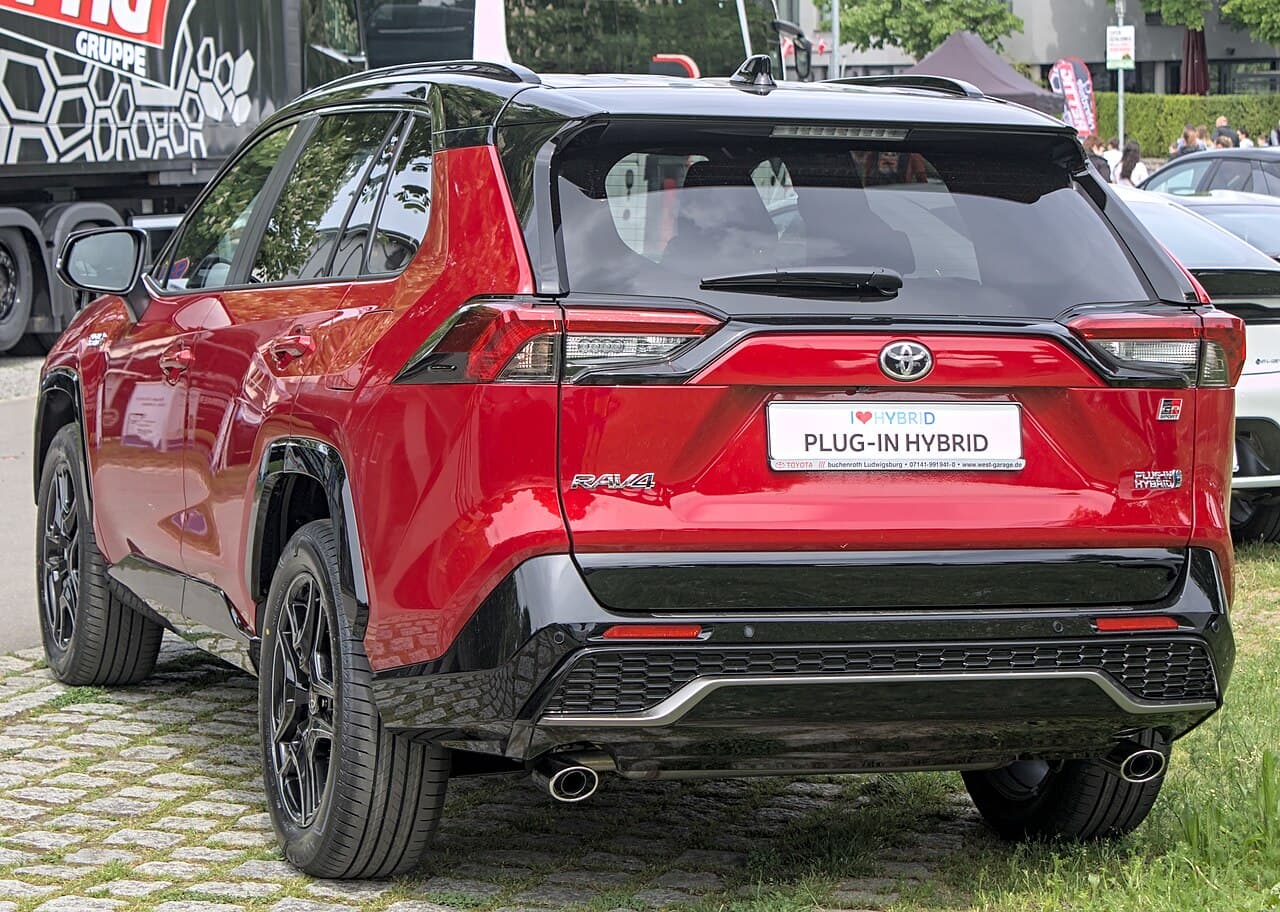
Toyota Camry Hybrid · Honda Accord Hybrid · Hyundai Sonata Hybrid · Kia K5 Hybrid · Toyota Corolla Hybrid · Ford Escape Hybrid · Toyota RAV4 Hybrid · Honda CR-V Hybrid · Hyundai Tucson Hybrid · Kia Sportage Hybrid · Lexus ES 300h
Comfort-first midsize sedans
Underrated for solo commuters who do not need SUV height.
Models to consider
Honda Accord · Toyota Camry · Hyundai Sonata · Subaru Legacy · Nissan Altima · Volkswagen Jetta / Passat · Chevrolet Malibu · Ford Fusion (used) · Mazda6 · BMW 3 Series · Mercedes-Benz C-Class · Volvo S60 · Genesis G80
American crossovers and sedans
Domestic badges with strong highway presence and dealer networks in the Midwest and South.
Models to consider
Chevrolet Equinox · Chevrolet Malibu · Ford Escape · Ford Edge · Buick Envision · Cadillac CT4 / CT5 · Jeep Grand Cherokee 4xe (PHEV) · Chrysler Pacifica Hybrid
European highway cruisers
When comfort and quiet matter more than mpg — budget for tires and service.
Models to consider
BMW 3 Series / 5 Series · Mercedes-Benz C-Class / E-Class · Audi A4 / A6 · Volvo S60 / V60 · Volkswagen Arteon · Genesis G90 (used value)
EV commuters with reliable charging
Works when home or workplace Level 2 is predictable — run public vs home charging math first.
Models to consider
Tesla Model 3 · Hyundai Ioniq 6 · Chevrolet Bolt EUV · Kia EV6 · Ford Mustang Mach-E · BMW i4 · Mercedes-Benz EQE / EQB · Volkswagen ID.4 · Nissan Ariya · Polestar 2
Plug-in hybrid bridge options
Electric weekdays, gas backup for overtime and family trips.
Models to consider
Toyota RAV4 Prime · Hyundai Tucson PHEV · Kia Sportage PHEV · Ford Escape PHEV · Chrysler Pacifica Hybrid · BMW X5 xDrive50e · Lincoln Corsair Grand Touring · Volvo XC60 Recharge
What everyone will say about your commute car
Prepare answers before the family dinner turns into a finance seminar. Each line below is common, often reasonable, and worth answering with numbers — not defensiveness.
“Why not just get a Camry Hybrid?”
Translation: They are often right on total cost. The 2024 AAA Your Driving Costs study puts hybrids among the lower per-mile ownership categories because fuel and maintenance stay controlled at 15,000+ miles a year. The real question is whether you are paying more for AWD, third-row space, or a badge you will not use at 70 mph. If your commute is solo and flat, a midsize hybrid sedan may beat a crossover on mpg and seat comfort. Run the hybrid vs EV monthly calculator before you pay for size you only need on Thanksgiving.
“That EV will save you money.”
Translation: Only if charging access and insurance cooperate. At U.S. residential rates near $0.10–$0.18/kWh, home Level 2 often beats gas on energy cost; public DC pricing frequently erases that gap. If you cannot name where the car charges on a normal Tuesday, the savings argument is ideology. Map home, workplace, and backup public stops — then use our public vs home charging and commute cost calculators. A long freeway commute without reliable charging is where hybrids still win on sanity, not just cents.
“German cars feel nicer.”
Translation: They often do — ride isolation, steering weight, interior design. They also carry tire, brake, and service costs that scale with mileage. AAA’s medium sedan and luxury-adjacent categories show higher maintenance cents-per-mile than mainstream hybrids. A C-Class or 3 Series you love at minute twenty can feel expensive at tire rotation time. If luxury is the goal, define whether you are buying comfort, badge, or both — and compare total monthly ownership in the affordability calculator, not just the lease ad.
“You spend that much time in the car, get something good.”
Translation: Valid — but define good. Good might mean lumbar support, adaptive cruise you trust, and a quiet cabin at 75 mph, not necessarily the highest trim on the lot. Census commuting data shows millions of Americans already exceed 60 minutes one way; the car should reduce fatigue, not add dashboard stress. Seat time is the argument for testing assistance systems and seat comfort on a 45-minute loop, not for upselling horsepower you use twice a week.
“American cars are unreliable — get Toyota.”
Translation: Reliability reputation matters in family approval conversations, and Toyota and Honda earned it. But modern GM, Ford, and Hyundai-Kia commuter products have closed much of the gap for highway miles — while domestic dealers are everywhere in Midwest and Texas commute corridors. Compare warranty length, service wait times near your home zip code, and insurance quotes on the exact trim. A slightly less viral badge with a shorter service loop can beat a perfect reliability score if the nearest qualified shop is an hour away.
“Just move closer to work.”
Translation: Sometimes that is the adult answer — but it ignores why many households commute in the first place: multigenerational housing, temple or church community, school districts, or mortgage math. The car is often the compromise tool, not the failure. If moving is off the table, optimize the commute stack: hybrid efficiency, assistance calm, toll transponder, and realistic monthly cost math. If the payment plus fuel still breaks the budget, the conversation is housing or job radius — not alloy wheels.
When to rethink the purchase
Sometimes the adult move is a different job radius, transit pass, or hybrid reality check.
- Do not buy a full EV for a long commute if you cannot name where it will charge on a normal week — see our condo charging guide and public vs home calculator.
- Do not buy a stiff sport-tuned SUV if your back already hurts on hour one.
- Do not ignore toll and parking costs when comparing payment quotes — Northeast and Bay Area commuters feel this daily.
- Do not assume a luxury badge fixes a route you hate driving.
- Do not skip the 45-minute highway test drive because the dealer only offers a city loop.
Regional commute realities
Same test, different traffic and cost assumptions — U.S. regions first.
Southern California
Freeway volume, HOV lane access, heat, and long San Gabriel Valley to LA legs — many commutes exceed the national 27-minute average by wide margins.
Bay Area / Northern California
Bridge tolls, stop-and-go pockets, and EV interest with uneven home charging in dense neighborhoods.
Texas
Heat, 70-mph highway speeds, long exurban legs, and truck-lane traffic on I-35 and I-10 corridors.
Northeast
Tolls, salt, tight parking at job centers, winter range loss for EVs, and I-95 congestion.
Greater Toronto Area
401 congestion, winter tires, and higher insurance on long daily miles — Canadian cross-border note.
What mainstream commute car reviews skip
Long commute guides love mpg charts. Diaspora households often add tolls, parent approval, and cross-county lifestyle tradeoffs that never show up on a window sticker.
- Many commuters deliberately live near ethnic enclaves or family while working in a distant job center — Census metro data shows mean commutes run longer in sprawling Sun Belt and West Coast counties than the national average.
- Hybrid credibility still beats EV enthusiasm when charging at home is uncertain; AAA’s 2024 ownership study ranks hybrids among the lowest total-cost categories when fuel and maintenance are combined.
- Seat comfort matters more than zero-to-sixty when you drive the same highway five days a week — fatigue-related crashes are chronically undercounted in police reports, but NHTSA and traffic-safety researchers treat drowsy driving as a serious highway risk.
- Monthly cost includes parking, tolls, and insurance, not just fuel or electricity. AAA estimates average new-vehicle ownership above $12,000 per year at 15,000 miles — payment is only part of that stack.
Stress-test the commute before the payment
Use our commute cost, hybrid vs EV monthly, car affordability, and lease vs finance calculators before you sign.
The bottom line
The best car for a long commute is the one you still want to sit in on a rainy Thursday and can afford on the fifteenth of the month.
Nearly one in ten U.S. workers already spends 60 minutes or more one way — the hardware should match that scale with seat comfort, sane assistance, and honest fuel or charging math.
Start with hybrid defaults if charging is uncertain. Move to EV only when your weekly charging plan is boringly reliable. Consider a comfort-first sedan if you commute solo and do not need SUV height.
Run the calculators, test the seat for real time, and bring the family the numbers before the badge.