Southern California Car Culture: Many Communities, One Shared Responsibility
Lowriders, Japanese classics, import tuners, hot rods, concours fields, off-road racers, EV builders, and track communities overlap here without becoming one scene. The way in is curiosity, historical respect, and behavior that helps organizers keep a place to gather.
Key numbers for Southern California Car Culture: Lowriders, Imports, Motorsport, and Community
- Lowrider tradition
- 80 years
- The Smithsonian's account of lowriding as Chicano art, craft, family tradition, and community building.
- Cruising law
- AB 436
- California's 2023 law removed local authority to regulate cruising and repealed the former minimum-clearance prohibition.
- Long Beach attendance
- 200,000+
- Attendance at the 2025 Acura Grand Prix of Long Beach, the event's strongest turnout since the 2008 Indy car reunification.
- Long Beach circuit
- 1.97 mi / 11 turns
- Temporary downtown street circuit assembled with more than 2,400 concrete safety blocks for the 2026 event.
- LA Auto Show
- Since 1907
- Annual consumer and industry show occupying roughly one million square feet of the Los Angeles Convention Center.
- Willow Springs
- Since 1953
- The main 2.5-mile, nine-turn road course remains in its original configuration under active new ownership.
- Irwindale finale
- Dec. 21, 2024
- Final event after 25 years as a home for oval racing, legal drag racing, drifting, and enthusiast festivals.
- California Lowrider Day
- First Sunday of summer
- The observance recognized by ACR 102, which also encourages safe events coordinated with clubs and local authorities.
Southern California has car cultures, plural
Southern California car culture is often flattened into a montage: a lowrider on Whittier Boulevard, an import in a neon parking lot, a hot rod by the beach, and a race car passing the fountain at Long Beach. The real communities are more specific. They have clubs, family histories, specialist trades, preferred venues, internal debates, and different ideas about what makes a car meaningful. A respectful guide should keep those distinctions visible.
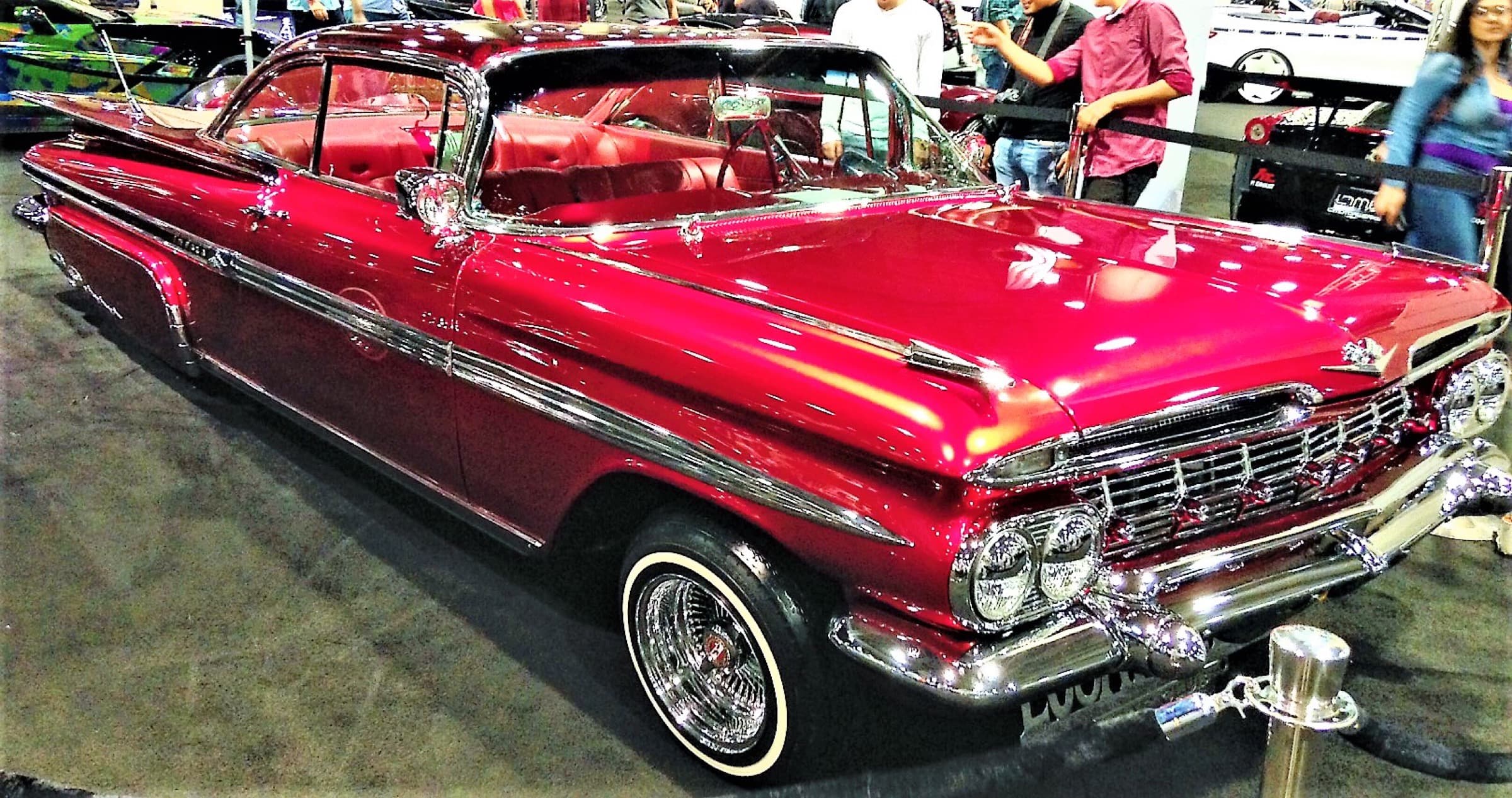
Lowriding grew through Mexican American and Chicano communities that turned postwar American cars into moving art and public declarations of identity. Japanese American drivers and businesses shaped dry-lake racing, service stations, gardening trucks, design studios, import tuning, and motorsport over more than a century. Hot rodders, customizers, off-road teams, concours volunteers, EV builders, and marque clubs followed their own lines through the same region. People and techniques cross those boundaries, but no one tradition is shorthand for all of them.
Geography matters without determining identity. East Los Angeles and Whittier carry documented lowrider history. Little Tokyo and Gardena anchor Japanese American automotive stories. The San Gabriel Valley connects homes, shops, community centers, former Irwindale events, and generations of enthusiasts. Koreatown is a dense, multiethnic neighborhood where drivers and enthusiasts live and gather, but available historical evidence does not justify branding it as a singular Korean tuning district. Orange County supports Japanese classics, customs, concours events, manufacturer ties, and broad suburban meet culture without every resident sharing one taste.
The public way into these communities is usually an established museum program, sanctioned race, permitted cruise, community-center show, concours, or organizer-led gathering. Social media can reveal an event, but it does not prove the property owner approved it or that the address should be republished. Verify the organizer, venue, rules, and admission information before attending.
Enthusiasm creates responsibility. A burnout leaving a meet can cost the organizer a venue. Blocking an intersection can put spectators, residents, and uninvolved drivers at risk. Publishing a private plate, child's face, or home address can expose an owner who was generous enough to share a car. The strongest community behavior is often quiet: arrive cleanly, follow parking instructions, ask questions, credit the work, buy from a local vendor, and leave without making the gathering harder to hold next time.
Museums, shows, and tracks that hold the public record
The Petersen Automotive Museum gives visitors a rotating institutional view of the region's interests. Its Best in Low exhibition examined paint, metalwork, interiors, hydraulics, street display, and the international reach of lowriding, including Japanese builders. Separate Japanese cruise-ins and the Japanese Classic Car Show have brought import and heritage communities together. Exhibitions rotate, so the current museum calendar—not a past guide—is the authority on what is on display.
The Los Angeles Auto Show has run since 1907 and occupies about one million square feet at the convention center. Its 2025 Underground program deliberately centered independent builders, artists, tuners, and storytellers rather than treating car culture only as a manufacturer display. The public 2026 show is scheduled for November 20–29, with AutoMobility LA on November 19, but dates and programming remain update-sensitive.
The Grand Prix of Long Beach turns downtown streets into a 1.97-mile, 11-turn circuit and drew more than 200,000 people in 2025. It combines IndyCar, sports cars, support races, drifting, exhibits, concerts, and a civic Motorsports Walk of Fame. It also closes and reroutes streets for days. Attending respectfully includes buying the correct pass, following transit and parking guidance, and recognizing that downtown residents and workers continue to use the surrounding city.
Willow Springs remains an active legal home for road-course driving and testing. Its main course has retained the 1953 2.5-mile, nine-turn configuration, while the larger property supports several disciplines. Irwindale Speedway closed after December 2024, ending a 25-year chapter for Formula Drift, oval racing, street-legal drag nights, and community festivals. Some activities moved elsewhere, but replacing a centrally located legal venue is not as simple as redirecting a social-media audience to a public road.
NASCAR's Clash left the Los Angeles Memorial Coliseum after the 2024 event. NASCAR has said Southern California remains important and has discussed a possible smaller track on its Fontana property, but no finished permanent replacement should be promised. That uncertainty makes existing sanctioned tracks, autocross sites, karting facilities, and permitted events more important.
Communities and contexts across the region
These modules identify documented histories and public entry points. They do not assign a vehicle taste to anyone based on ethnicity or ZIP code.
East Los Angeles, Boyle Heights, and Whittier Boulevard
A central geography in the history of Chicano lowriding, cruising, murals, clubs, family craft, and public-space debates.
- ·Approach lowriders as authored artwork and skilled fabrication, not a prop
- ·Learn the club, painter, engraver, upholsterer, and builder names when they are shared
- ·Distinguish a permitted cruise from a street takeover
- ·Ask before photographing owners, children, interiors, or identifying plates
Little Tokyo and the Japanese American automotive story
The 2025 Cruising J-Town research connects Japanese American life to racing, work trucks, service businesses, design, imports, and tuning.
- ·Use Japanese American history rather than treating the scene as a recent media trend
- ·A Japanese-brand car sold in the United States is not automatically a Japanese-domestic-market vehicle
- ·Credit the immigrant businesses and working vehicles alongside race and show cars
- ·Check current Japanese American National Museum and community programming
Gardena, Torrance, and the South Bay
Japanese American institutions, manufacturer offices, port-adjacent industry, community shows, and motorsport history overlap here.
- ·Community-center shows often support broader cultural and youth programs
- ·Follow display registration rules rather than assuming every Japanese car belongs in a judged area
- ·Respect volunteers, family activities, and food vendors as part of the event
- ·Keep public-road driving separate from track or drift technique
San Gabriel Valley
A large, diverse residential and commercial region tied to import enthusiasm, shops, Route 66 history, and the former Irwindale Speedway.
- ·Do not turn Asian American population into a stereotype about modified cars
- ·Verify meet permission because retail parking lots remain private property
- ·Support specialist shops without presenting modifications as emissions-law exemptions
- ·Acknowledge the loss of Irwindale as a legal venue without romanticizing unsafe replacement activity
Koreatown and central Los Angeles
Dense nightlife, apartments, restaurants, creative work, and limited parking place many kinds of drivers together, but evidence does not support one ethnicized tuning narrative.
- ·Describe specific organizers and events rather than labeling the neighborhood
- ·Do not publish private meet addresses or block driveways for photographs
- ·Keep noise and late-night departures considerate of residents
- ·Use secure legal parking and avoid displaying valuables
Orange County — Japanese classics and concours
Japanese classics, customs, hot rods, concours fields, manufacturer links, and broad cars-and-coffee traditions appear across suburban venues from Huntington Beach to Irvine.
- ·The Huntington Beach Concours has supported the library's Children's Resource Center since its early years
- ·Established show categories can include customs, Japanese classics, European cars, motorcycles, and preservation vehicles
- ·Verify venue and date because informal gatherings move frequently
- ·Quiet arrivals protect access to office, retail, and community-center properties
Orange County — Little Saigon and Bolsa corridor
Separate from the concours calendar: Westminster and Garden Grove carry Vietnamese American commercial life, plaza weekends, and a documented SoCal Asian American import history that should not be flattened into one tuner myth or one luxury stereotype.
- ·1990s–2000s import show and street culture drew Asian American participants from Little Saigon through the South Bay — treat that as history with organizers and venues, not a present-day ethnic label for every young driver
- ·Family ownership on Bolsa Avenue trip chains often looks like hybrids, minivans, and parent-approved Lexus/Acura CPO — not a continuous VIP-sedan parade
- ·Do not publish private meet addresses; keep night-market and plaza parking considerate of residents and businesses
- ·For ownership math, use the Orange County car-ownership guide rather than assuming culture equals badge
Long Beach and the harbor cities
The Grand Prix, port economy, Japanese American history, custom culture, and community events make Long Beach a major public motorsport anchor.
- ·Use official transit, parking, and closure information during race week
- ·The Motorsports Walk of Fame is a free civic history resource
- ·A race ticket does not authorize access to closed streets or private marinas
- ·Treat support categories and local exhibitors as part of the event, not filler around the headline race
Ways to participate without losing the culture
At a lowrider cruise or show
- ·Look first and do not touch paint, chrome, etched glass, plaques, switches, or upholstery
- ·Ask builders about process rather than demanding a hydraulic demonstration
- ·Recognize women, families, clubs, and younger apprentices as participants
- ·Do not repeat the old stereotype that lowriding, gangs, and sideshows are interchangeable
- ·Follow the cruise route and ordinary traffic laws even though California ended local anti-cruising authority
At a Japanese classic or import gathering
- ·Use JDM only when a vehicle or component was actually produced for the Japanese domestic market
- ·Ask permission before photographing an engine bay, interior, owner, or identifying plate
- ·Avoid dismissing stock preservation cars because they are not highly modified
- ·Credit fabrication, tuning, paint, wheel, and restoration work accurately
- ·Keep revving, launch demonstrations, and aggressive departures away from public meets
At cars-and-coffee or a concours
- ·Confirm the organizer and property permission before sharing an event
- ·Follow the parking orientation and leave fire lanes, accessible spaces, and business access clear
- ·Keep food, drinks, bags, strollers, and pets away from displayed paint
- ·Respect judged-car boundaries and volunteer instructions
- ·Buy from the venue or vendors when appropriate; a gathering survives through relationships as well as attendance
At a museum or auto show
- ·Check the current exhibition list and public hours before traveling
- ·Read labels for provenance and builder credit instead of treating every car as a celebrity object
- ·Ask before using tripods, lighting, or commercial photography
- ·Use public programs to meet historians and craftspeople without interrupting private conversations
- ·Remember that an institutional exhibition is one interpretation, not the total voice of a community
At a track or sanctioned performance event
- ·Read technical-inspection, helmet, sound, tow-hook, tire, and passing rules before arrival
- ·Check whether ordinary auto insurance excludes timed or track activity
- ·Begin with instruction rather than chasing an unofficial lap time
- ·Keep fluids, tires, brakes, and wheel torque within the organizer's safety requirements
- ·Leave competition behavior at the venue when returning to public roads
Community etiquette in real situations
Your first lowrider event
Ask who painted, upholstered, engraved, or built the car rather than reducing years of work to its suspension. If the owner shares a club or craftsperson's name, include that credit with any published image. A respectful conversation begins with the work in front of you.
A Japanese-brand car is described as JDM
A U.S.-market Civic, Supra, or Z can belong fully within import culture without being a Japanese-domestic-market car. Ask about market origin and build details. Precise language shows more interest than applying the most fashionable label.
An informal meet sends a new address
Confirm the message came from the organizer and that the venue permits the gathering. Do not republish a private address, arrive early to occupy customer parking, or treat silence from a property owner as approval.
Someone prepares a burnout on departure
Do not encourage or film from the roadway. Warn an organizer when it can be done safely and move away from the exit. One dangerous departure can injure a bystander and end the venue relationship for everyone.
A takeover invitation appears online
Do not attend as a spectator. California expanded arrest, license, warrant, and vehicle-impoundment tools for sideshows and street takeovers in 2025. More importantly, blocked intersections expose residents and uninvolved road users to predictable harm.
A driver wants to explore performance safely
Choose a sanctioned autocross, karting session, track day, drag event, or driving school. Read the organizer's rules, prepare the car, disclose experience honestly, and budget for instruction and consumables. Public canyon roads cannot provide the controlled direction, runoff, corner workers, and medical plan of a legal venue.
New technology belongs in the culture without replacing its history
Southern California enthusiast culture continues to absorb EVs, hybrids, software, charging, restomods, and new fabrication methods. Those vehicles can sit beside preservation cars and traditional customs without turning the event into a referendum on one correct powertrain. Ask what the builder intended and how the work was completed.
Apartment and condo enthusiasts face practical limits that detached-garage coverage often ignores: no fabrication space, restrictions on repairs, uncertain charging, and secure-parts storage. Public events and community workshops can provide social access even when a person cannot build at home. Ownership status should not become a gatekeeping test for whether someone belongs.
Legal compliance remains part of responsible building. A permitted cruise does not waive equipment, emissions, noise, registration, or reckless-driving laws, and a track modification may not be legal for street use. Consult current California rules and qualified shops before presenting a modification as road legal.
What to carry into the showroom
Southern California car culture is strongest when its histories remain specific. Lowriding is Chicano art and community as well as automotive craft. Japanese American car history reaches far beyond a recent tuner aesthetic. Motorsport depends on sanctioned places and thousands of workers and volunteers. Neighborhoods supply context, not stereotypes.
A newcomer does not need the rarest car to participate. Show up on time, follow the organizer's rules, ask before touching or photographing, credit people's work, spend locally when possible, and leave quietly. Those habits help a community keep its history, its welcome, and its venue.
Related guides
- Southern California Region Guide
- Scott Robinson Honda Dossier
- LA Dealership Dossiers
- Cruising J-Town and Japanese American Import Culture
- South Korea's Underground Car Scene
- Toyota Classic Car Restoration Parts
- Toyota Trust and the Family Default
- Honda and Acura: The Other Family Default
- Rivian and Polestar: EV-Adjacent Luxury
- First Luxury Car Guide
- Best Used Cars Under $30K Framework
- Best Cars for New Grads and Young Professionals
- EV vs Hybrid for Asian American Drivers
- Los Angeles to Big Sur
- San Francisco to Los Angeles
- Los Angeles to San Diego
- Letters to Eastward Drive
- Meet the Contributors
More SoCal driving guides
Orange County Car Ownership: Tolls, Freeways, Charging, and Family Routines
A practical guide to owning a car in Orange County, from I-5 and I-405 construction to toll roads, home charging, school runs, John Wayne Airport, and Anaheim resort traffic.
Seasonal safetySouthern California Seasonal Driving: Mountains, Wildfire, and Desert Heat
Prepare a Southern California vehicle for mountain chain controls, wildfire evacuation, smoke, extreme heat, desert breakdowns, and changing EV range without turning the guide into an itinerary.
Commute costsLos Angeles Commute Costs
Freeway corridors, express lanes, parking, fuel, insurance, Metro alternatives, and worked monthly commute math for Los Angeles drivers.
Ownership realityLos Angeles Car Ownership
Parking permits, street sweeping, theft, apartment charging, heat, and a practical test for whether a car earns its space in Los Angeles.
SGV & Inland EmpireSan Gabriel Valley & Inland Empire Car Ownership
I-10, SR-60, I-210, supercommutes, heat, multigenerational routines, and vehicle needs across the San Gabriel Valley and Inland Empire.