Northern California Car Culture: JDM Meets, Lowriders, Sacramento Customs, and World-Class Racing
The Bay Area, Sacramento, Sonoma, and Monterey share a map but not one scene. This guide treats their communities as distinct histories built around craft, identity, competition, preservation, and gathering.
Key numbers for Northern California Car Culture
- California cruising law
- AB 436
- Chapter 803 of the 2023 statutes removed local authority to regulate cruising and repealed the state's lowered-vehicle clearance prohibition.
- Pebble Beach Concours
- 75th edition
- The official 2026 Concours d'Elegance is scheduled for August 16 on the 18th fairway at Pebble Beach.
- Monterey Motorsports Reunion
- Aug. 12–15
- Official 2026 dates at WeatherTech Raceway Laguna Seca, whose program salutes Japanese motorsport and adds its first JDM car show.
- Laguna Seca circuit
- 11 turns
- The county-owned road course is internationally known for the Corkscrew and hosts modern, historic, motorcycle, and grassroots events.
- Sonoma grassroots drags
- 15 events
- Sonoma Raceway's announced 2026 drag and bracket schedule, marking the program's 38th season.
- Sacramento Autorama
- 75th edition
- The May 1–3, 2026 show at Cal Expo advertised more than 500 indoor vehicles spanning customs, hot rods, lowriders, motorcycles, and specialty builds.
- California Automobile Museum
- 130+ cars
- Collection size cited by the Sacramento museum alongside rotating club displays, classes, and Third Sunday rides.
- SF Lowrider Council calendar
- 7 events
- Named public cultural events on its 2026 calendar from March through November, including cruises, Carnaval, a parade, and community programming.
Northern California has scenes, not a single scene
Northern California car culture is easiest to misunderstand when it is reduced to one image: a supercar in Carmel, an import in a San Jose parking lot, a lowrider on Mission Street, or a race car disappearing into Laguna Seca's Corkscrew. Those communities share geography, but they do not share the same history, money, or purpose.
A useful guide starts by asking what the car is doing there. It may preserve a family story, demonstrate paint and upholstery craft, connect an owner with a marque club, give a young driver a legal place to compete, or turn engineering history into something that moves and makes noise. Treating every gathering as a search for status misses the labor and relationships that hold the scene together.
The Bay Area's JDM and tuner communities are decentralized. Some owners restore Japanese-market cars or build period-correct versions of models sold here. Others tune contemporary Japanese, Korean, European, or American platforms, participate in drift and time-attack events, collect kei vehicles, or simply attend a morning meet. JDM means Japanese domestic market; it should not be used as a label for every Japanese-brand car or every Asian American enthusiast.
Lowriding carries a separate history rooted in Mexican American and Chicano communities, club organization, family participation, visual art, mechanical craft, and cruising. California's AB 436 removed local authority to regulate cruising and repealed the former clearance prohibition on lowered vehicles. That legal change deserves context: state legislators explicitly recognized that older cruising bans had unfairly associated lowriders with gangs and other unsafe activity.
Organized lowrider cruises should not be collapsed into illegal sideshows. Oakland and San Jose continue to address dangerous stunt driving as a public-safety problem. That reporting can remain clear without assigning the conduct to lowrider, tuner, or other cultural communities. Sanctioned track activity, permitted cruises, static shows, and disruptive public-road events are different subjects.
The calendar ranges from neighborhood-scale gatherings to global collector events. Sonoma offers professional NASCAR and NHRA weekends as well as accessible drag racing. Sacramento maintains a custom-car and museum ecosystem. Monterey Car Week brings concours, auctions, manufacturer displays, rallies, and historic competition together, while Laguna Seca operates as a year-round raceway rather than a one-week backdrop.
The institutions that give the culture a place to gather
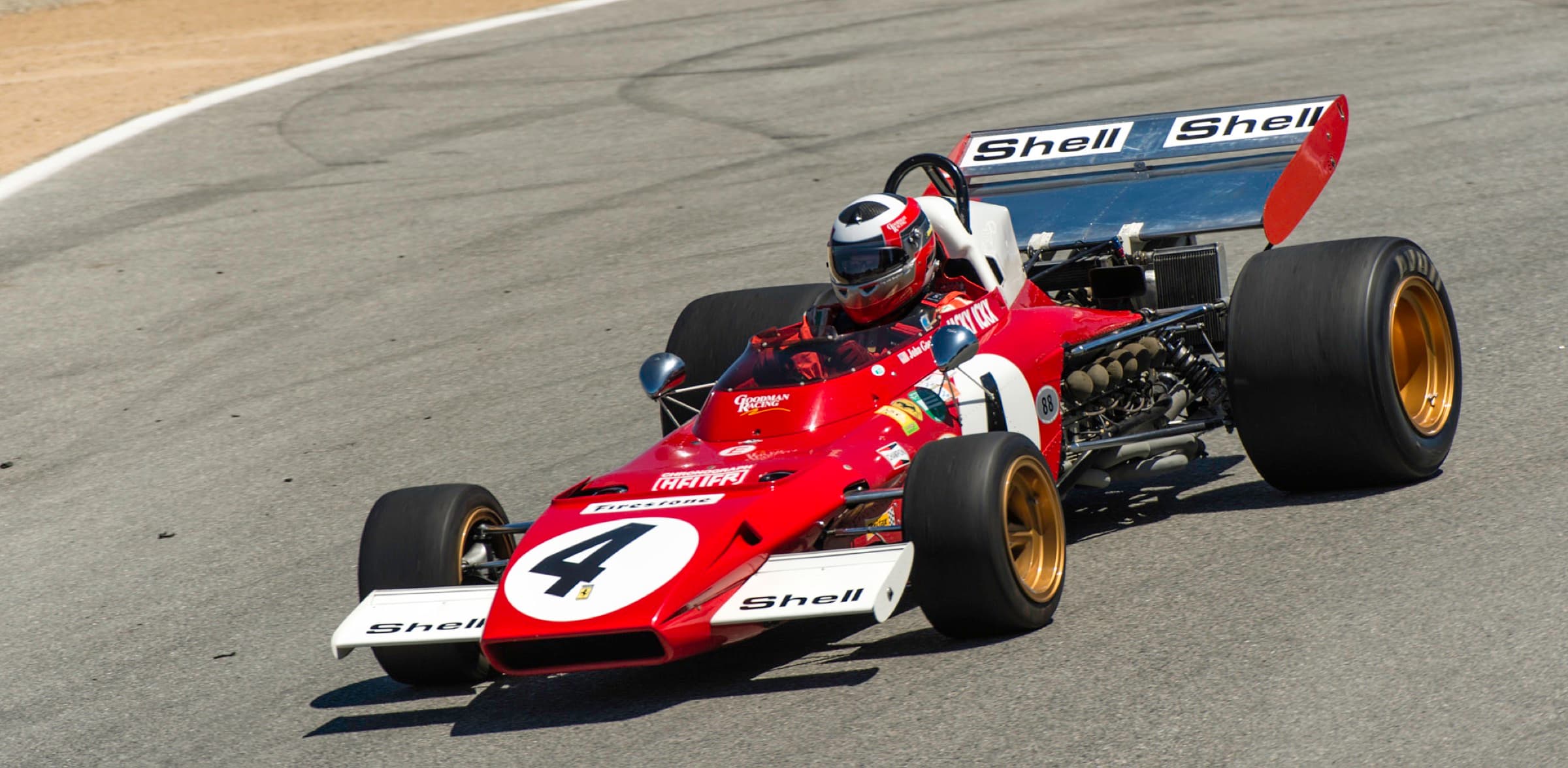
WeatherTech Raceway Laguna Seca anchors Northern California road racing. Its 2026 season includes IMSA sports cars, Ferrari Challenge, MotoAmerica, the Pre-Reunion and Corkscrew Hillclimb, the Rolex Monterey Motorsports Reunion, IndyCar, GRIDLIFE, and additional club or festival programming. The range matters: the venue connects professional series, historic preservation, motorcycles, drifting, time attack, and spectators encountering their first race.
Sonoma Raceway serves a different mix of road-course and drag-racing traditions. NASCAR's annual road-course weekend and the NHRA Sonoma Nationals are the large professional draws. Sonoma Drags and bracket events create a lower barrier to participation: a licensed driver with a street-legal vehicle that passes technical inspection can experience the strip in a controlled setting. The official 2026 announcement lists 15 events across the program's 38th season.
Sacramento's California Automobile Museum turns automotive history into a year-round public resource. The museum describes a collection of more than 130 vehicles and supplements static displays with rotating car-club showcases, Model T and Model A driving classes, photography instruction, and Third Sunday rides. The annual Autorama at Cal Expo is a separate custom-car institution, with judged indoor builds and an outdoor drive-in component.
San Francisco's Academy of Art University Automobile Museum presents design and restoration history at 1849 Washington Street. It is open to the public on limited weekday hours through advance scheduling, so it should never be described as an always-open walk-in stop. The former public Blackhawk Museum automotive gallery should also not be confused with the current Blackhawk Collection, a private Danville showroom available by appointment.
Cultural institutions broaden the record beyond traditional automobile museums. Crocker Art Museum has documented Sacramento's Royal Chicano Air Force, including Rudy Cuellar's 1978 Lowrider Carrucha Show print, and has partnered with the Sacramento Lowrider Commission on public programming. That work places lowriding inside regional art and civic history rather than treating the cars as detached objects.
A map of Northern California's car communities
These modules identify cultural centers and institutions, not boundaries. Clubs, builders, owners, and events routinely connect several regions.
San Jose & the South Bay
Import tuning, technology, lowrider history, marque clubs, and large indoor shows meet a diverse set of suburban and urban communities.
- ·San Jose repealed its municipal cruising regulation in 2022 before the statewide change
- ·Use JDM accurately and do not infer an owner's identity from the car
- ·Confirm informal meets directly with organizers and protect private locations
San Francisco Mission District
A living lowrider corridor where cruises, Carnaval, club history, murals, music, and neighborhood institutions overlap.
- ·The San Francisco Lowrider Council publishes an official annual calendar
- ·Credit clubs, builders, painters, upholsterers, and owners where known
- ·Expect transit changes and street controls around permitted public events
Oakland & the inner East Bay
Home to enthusiast groups, restoration and performance shops, industrial creative space, and a distinct sideshow history that requires precise language.
- ·Do not use sideshow as a catch-all term for East Bay car culture
- ·Support host businesses and follow neighborhood noise and parking rules
- ·Seek organizer consent before publishing a recurring informal location
Danville & the I-680 corridor
Collector-car activity and club drives sit near the appointment-only Blackhawk Collection and affluent East Bay ownership networks.
- ·Blackhawk Collection is a private showroom, not a normal walk-in museum
- ·Verify appointments and current inventory before recommending a visit
- ·Collector culture is one part of the East Bay, not a proxy for the entire region
Sacramento
Customs, hot rods, lowriders, museum education, clubs, and political-art history give the capital its own year-round identity.
- ·Autorama and the California Automobile Museum are separate institutions
- ·Crocker and RCAF archives provide cultural context beyond show awards
- ·Use Kustom Capital of the World only as attributed organizer language
Sonoma
A professional raceway and grassroots drag venue surrounded by wine-country roads that are public, enforced, and shared.
- ·Keep performance driving at the venue rather than romanticizing nearby public roads
- ·Sonoma Drags accepts many street-legal vehicles after inspection
- ·Wednesday-night drifting is no longer automatically paired with the drag program
Monterey, Carmel & Pebble Beach
A global collector and manufacturer stage each August, with concours, auctions, rallies, free public displays, and major ticketed events.
- ·Pebble Beach Concours is the finale, not the whole of Monterey Car Week
- ·Annual dates, admission, parking, and event names change
- ·Acknowledge accessible public events alongside invitation-only and premium gatherings
Laguna Seca
An 11-turn road course in Monterey County whose Corkscrew connects modern racing, historic competition, motorcycles, and enthusiast festivals.
- ·The raceway operates beyond Monterey Car Week
- ·The 2026 Reunion officially salutes Japanese motorsport and adds a JDM show
- ·Use the venue's calendar for current dates rather than copying a prior season
The recurring calendar, with dates that must be refreshed
Winter and early spring
- ·Sonoma's grassroots drag calendar begins before the major summer race weekends
- ·Museum classes and club displays continue when outdoor-show calendars are quieter
- ·Rain can postpone track and outdoor events; confirm directly before traveling
- ·Local cars-and-coffee gatherings are organizer-led and should not be treated as permanent fixtures
Spring and early summer
- ·Sacramento Autorama traditionally anchors the custom-show calendar
- ·San Francisco lowrider programming includes Cinco de Mayo and Carnaval events
- ·Laguna Seca hosts sports cars and motorcycles before Monterey Car Week
- ·Sonoma's NASCAR weekend is a distinct event from its NHRA weekend
Monterey August
- ·The 2026 Rolex Monterey Motorsports Reunion runs August 12–15
- ·The 75th Pebble Beach Concours is scheduled for August 16, 2026
- ·Auctions, marque reunions, rallies, and public shows operate independently across the peninsula
- ·Move annual details into an updateable callout instead of presenting them as permanent facts
Late summer and fall
- ·IndyCar and GRIDLIFE extend Laguna Seca's season beyond the historic reunion
- ·San Francisco's council calendar includes a lowrider parade, night cruise, and community events
- ·Smoke or fire conditions can change outdoor programming and travel
- ·Respect cancellations and venue rules rather than encouraging unofficial replacements
How to participate without flattening the community
First visit to an informal meet
Confirm the event with the organizer, arrive and leave quietly, support the host business, and keep the site clean. Do not touch a car or stage a close portrait without permission. Avoid publishing a location that the organizer deliberately shares only shortly before each gathering.
Covering a lowrider event
Begin with the club and community purpose, then identify the owner, builder, painter, upholsterer, and vehicle accurately. Include women, families, artists, and organizers rather than framing the scene only through male owners or hydraulics. Do not substitute sideshow imagery for lowrider history.
Curious owner who wants to race
Choose a sanctioned drag, autocross, track-day, time-attack, or driving-school event whose technical rules match the vehicle and experience level. Read the rulebook before modifying the car, inspect brakes and tires, and budget safety equipment, consumables, and instruction ahead of horsepower.
Family introducing children to car history
A museum ride, daytime concours, paddock visit, or club display can be more approachable than an all-day professional race. Check hearing-protection needs, walking distances, age rules, and whether a guided reservation is required. Let children ask owners before touching or entering a vehicle.
Owner building a period-inspired Japanese car
Research the model's actual market history before labeling the result JDM. Imported parts, a Japanese-market trim, and a U.S.-market car can coexist in one build, but they are not interchangeable facts. Credit shops and community sources and avoid claiming period correctness without documentation.
Electrification is becoming part of the culture, unevenly
Northern California's enthusiast world includes EV conversions, modern performance EVs, electric motorcycles, charging meetups, and debates over software, weight, sound, and repairability. Those conversations belong beside combustion culture rather than in a separate future tense. A technology can be culturally meaningful before every club adopts it.
Track use exposes practical differences. Repeated high-power sessions consume energy quickly and require thermal planning, reliable charging, and realistic turnaround time. Organizers determine whether on-site charging is available and whether a vehicle class is eligible. Never assume that a public charger near a venue is reserved for participants or available after the event.
Classic conversions raise preservation questions as well as performance opportunities. A reversible conversion, documented original components, and honest disclosure can matter to historians and future owners. The guide should describe the tradeoff without presenting conversion or preservation as the only respectful answer.
At shows and meets, judge the work being presented rather than using range, exhaust sound, or acceleration as a loyalty test. Northern California car culture has always changed with available platforms, regulations, immigration, industry, and technology; the useful question is how owners build community around the machine they have.
What to carry into the showroom
The most rewarding way to understand Northern California car culture is to visit more than one part of it. Pair a community cruise with a museum, a grassroots race with a professional weekend, or a tuner meet with historic competition. The differences are the story.
Attend as a guest: verify the organizer, respect the site, credit the people who did the work, and keep performance driving at sanctioned venues. A car may be the object in the photograph, but the culture belongs to the community around it.
Related guides
- Northern California Region Guide
- East Bay & Contra Costa Car Ownership
- Northern California Seasonal Driving
- San Francisco to Monterey Road Trip
- Monterey Peninsula Car Culture
- Monterey Car Week Weekend Drives
- Monterey Car Week 2026 Week Guide
- San Francisco to Los Angeles Road Trip
- Southern California Region Guide
- South Korea's Underground Car Scene
- Toyota Classic Car Restoration Parts
- Toyota Trust and the Family Default
- Honda and Acura: The Other Family Default
- Why Lexus Owns the Comfort Conversation
- Best Cars for Asian American Families
- First Luxury Car Guide
- EV vs Hybrid for AAPI Drivers
More NorCal driving guides
East Bay & Contra Costa Car Ownership
A practical guide to car ownership from Oakland and Berkeley to Walnut Creek and Livermore, covering theft, insurance, BART parking, supercommutes, heat, and family needs.
Seasonal preparednessSeasonal Driving: Tahoe, Wildfire & Rain
Prepare a Northern California car for Tahoe chain controls, wildfire smoke and evacuation, atmospheric-river flooding, wet-weather tires, and realistic EV energy buffers.
Culture & placeMonterey Peninsula Car Culture
Why classic-car culture rooted on the Monterey Peninsula - from Del Monte Forest road races and the first Concours to Laguna Seca, auctions, and Car Week - plus how to drive and visit the towns year-round.
Commute costsBay Area Commute Costs
Price a real Bay Area commute across bridge tolls, FasTrak, express lanes, fuel, parking, insurance, BART, Caltrain, and VTA.
City ownershipSan Francisco Car Ownership
Decide whether a car earns its space in San Francisco through parking permits, garage fit, street rules, theft exposure, insurance, and charging.
Household planningPeninsula and South Bay Car Ownership
Match 101, 280, and 880 commute vectors with Caltrain, VTA, BART, charging control, and the right one-car or two-car household plan.