
Eastward Drive
Menu
EV & HybridJune 7, 2026·National

Wheelsboy Is Showing Americans the Chinese EVs They Cannot Buy Yet

At Auto China in Beijing, American YouTuber Ethan Robertson toured foreign visitors through EV halls that U.S. shoppers mostly see only on screens—while tariffs keep the cars out of reach.
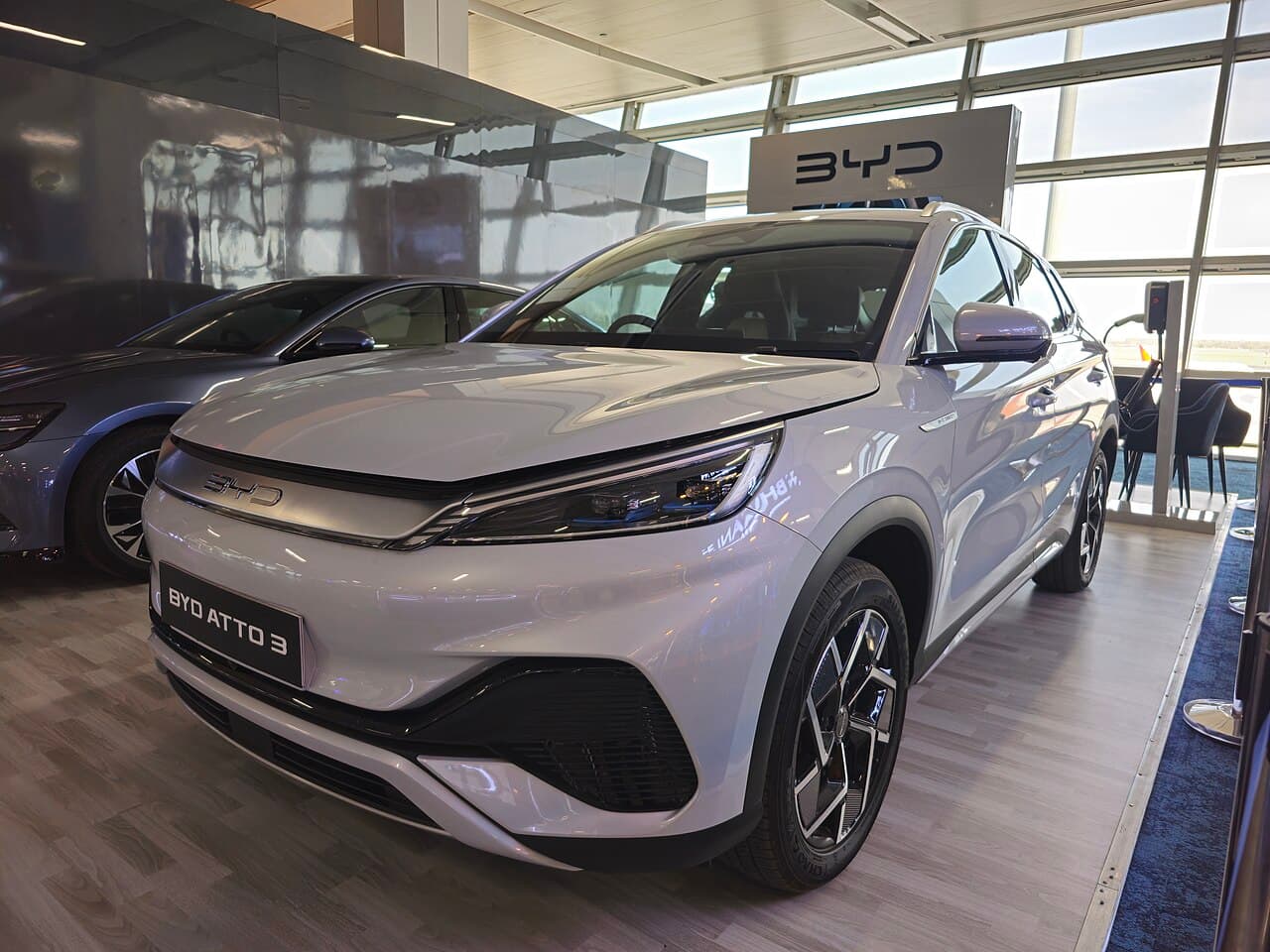
BYD Atto 3 electric crossover
Photo: Wikimedia Commons / CC BY-SA 4.0

What happened

Reuters reported on April 26, 2026 from Beijing that American YouTuber Ethan Robertson led more than a dozen visitors from Australia, New Zealand, the United Arab Emirates, and other countries through the Beijing International Automotive Exhibition, also known as Auto China.

Robertson, 34, is a North Carolina native who co-founded Wheelsboy, a YouTube channel focused on Chinese cars for English-speaking audiences.

Reuters photographed him on a Great Wall Motor Hi4-T off-road vehicle while guiding the tour through halls filled with electric SUVs, pickup trucks, and concept cars.

Robertson told Reuters that U.S. viewers' perception of Chinese vehicles has shifted over six years of coverage, from copycat skepticism toward recognition of advances in battery performance, software, and charging speed.

Lei Xing, American co-host of the China EVs & More podcast, told Reuters that China's market—with more than 100 automakers—remains complex even for specialists.

Lei said he does not expect Chinese brands to enter the U.S. quickly because of political hostility, but believes they will eventually reach American buyers, adding: "I know in my life I'm going to be able to buy a Chinese EV."

The Eastward Take

There is a strange new job in global car culture: translator between what China builds and what America is allowed to buy.

Ethan Robertson did not invent that role, but Wheelsboy has become one of its clearest examples.

He is American, based in China, fluent in both automotive jargon and internet tone, and willing to walk foreigners through an auto show floor that U.S. policy keeps mostly theoretical for domestic shoppers.

That combination matters to Asian North American audiences specifically.

Many households here are not abstractly curious about Chinese EVs.

They are personally connected to the conversation.

Cousins in Shenzhen send photos of BYD interiors.

Parents who moved in the 1990s remember when Japanese reliability rewired American trust.

Younger buyers in Vancouver and Toronto already live in markets where Chinese EV quotas and tariffs are daily news.

Watching Robertson guide a tour at Auto China is watching the information gap widen in real time.

The cars on that floor are not secret prototypes hidden from the internet.

They are on YouTube.

They are in group chats.

They are in the background of travel videos.

What U.S. shoppers lack is not awareness.

It is access.

Reuters framing the story through foreign visitors is useful because it shows how normal these products look when politics is not the first filter.

Low price, advanced tech, and variety are not exotic claims on a spec sheet.

They are the obvious reaction when you stand in front of the metal.

Robertson's six-year arc from copycat jokes to battery-and-software respect mirrors what a lot of skeptical American viewers are slowly admitting in comment sections.

The cars changed faster than the national argument.

Lei Xing's line about eventually buying a Chinese EV in his lifetime is the quiet headline.

Not if tariffs fall tomorrow.

Not if BYD opens in Texas next quarter.

Just the calm confidence of someone who reads both markets and knows momentum when he sees it.

The Great Wall Hi4-T moment in Reuters coverage is not random.

Off-road-capable EVs are part of the product mix now, not a novelty trim.

When Robertson guides visitors at Auto China, he is showing that Chinese automakers build the categories Americans actually shop, not only cheap city runabouts.

The tour group from Australia, New Zealand, and the UAE matters because those markets are already living the import conversation Canada knows well.

The U.S. is the outlier, not the template.

Robertson living in China while speaking to American viewers creates a bridge role older media never had.

He films production cars in a market that refreshes faster than most U.S. dealer lots rotate inventory.

Lei Xing admitting the market is too complex even for specialists is oddly reassuring.

It means the speed of change is real, not a marketing illusion.

For parents who lived through Toyota and Honda trust-building in America, the parallel is uncomfortable but clear.

Japan won reliability first, then culture.

China is trying to win software, price, and refresh cycles first.

None of this means you should ignore service networks or political risk.

It means you should not dismiss the products because the feed moves faster than your local showroom.

Think about what Wheelsboy actually does for a household in Irvine or Fremont.

It turns dinner-table debate into something you can see.

Your uncle says Chinese cars are copies.

Your cousin sends a clip of a Zeekr interior with a rotating screen.

Your parent asks about safety ratings and you realize the U.S. model you can test-drive has not changed much in three years while the Beijing floor got ten new debuts.

That is not pro-China propaganda.

That is competitive pressure made visible.

Media literacy matters here.

YouTube tours are not warranty documents.

They are context.

They help you ask sharper questions at the local dealer: why does this trim cost more while updating slower?

Why is the software in my 2024 model already two cycles behind what my relative saw abroad?

Those questions change how families negotiate the next purchase even when nobody imports a car tomorrow.

For Canadian readers especially, Robertson's content is not fantasy.

It is preview.

Quota frameworks and tariff politics mean some of these brands will appear in Vancouver showrooms while Seattle shoppers still watch from a distance.

That creates familiar diaspora tension: the cousin who can buy what you cannot, the parent who remembers when Japanese cars faced the same suspicion, the kid who thinks politics is boring until it hits the payment calculator.

Wheelsboy also highlights a generational media shift.

Automotive journalism used to gatekeep access through press fleets and embargo dates.

Now an American creator on the ground in China can move faster than legacy outlets on certain stories.

That does not replace investigative reporting on tariffs, labor, or data privacy.

It complements it by showing product reality at human scale.

When Reuters follows Robertson through Auto China, it validates what enthusiasts already suspected: the most interesting car market in the world is partly invisible to the country that still thinks it sets every trend.

For Eastward readers, the practical takeaway is not to preorder a vehicle you cannot service.

It is to stop pretending the future inventory conversation is fantasy.

Cross-border families already feel this.

A kid in Irvine may be cross-shopping a Model Y while an aunt in Richmond compares a Zeekr against a Tesla on price and interior tech.

Same family logic, different showroom reality.

Media like Wheelsboy does not replace dealer visits or warranty math.

It does something dealers cannot do for U.S. buyers yet: it makes the forbidden shelf feel real.

That changes how you evaluate the cars you can buy today.

If the best value in the world is visible but blocked, the cars on your local lot need to earn their price on merit, not on absence of competition.

That is the pressure Chinese EVs apply even before they arrive.

Watch the tours if you want context.

Run the affordability calculator if you are buying this year.

Ask your family which features they saw abroad that your local test-drive lacks.

Compare charging standards, software update policies, and resale assumptions on paper.

If someone in your family asks why America does not get those cars yet, you can give a better answer than \"because they are Chinese.\"

The answer is policy, timing, manufacturing strategy, and a market that is still deciding whether it wants the competition.

The cars themselves are already here in the feed.

They just are not in the driveway yet.

When they arrive, the households that understood the gap early will shop smarter.

The ones that refused to look will pay premium prices for yesterday's story.

Source

This note summarizes reporting from Reuters. Read the original for full details.

chinese evbeijing auto showwheelsboyyoutubetariffsmedia