
U.S. Public EV Charging Crosses 250,000 Ports
Federal station data now lists more than 250,000 public charging ports at roughly 80,500 locations nationwide, including about 73,000 DC fast chargers and 180,000 Level 2 plugs.
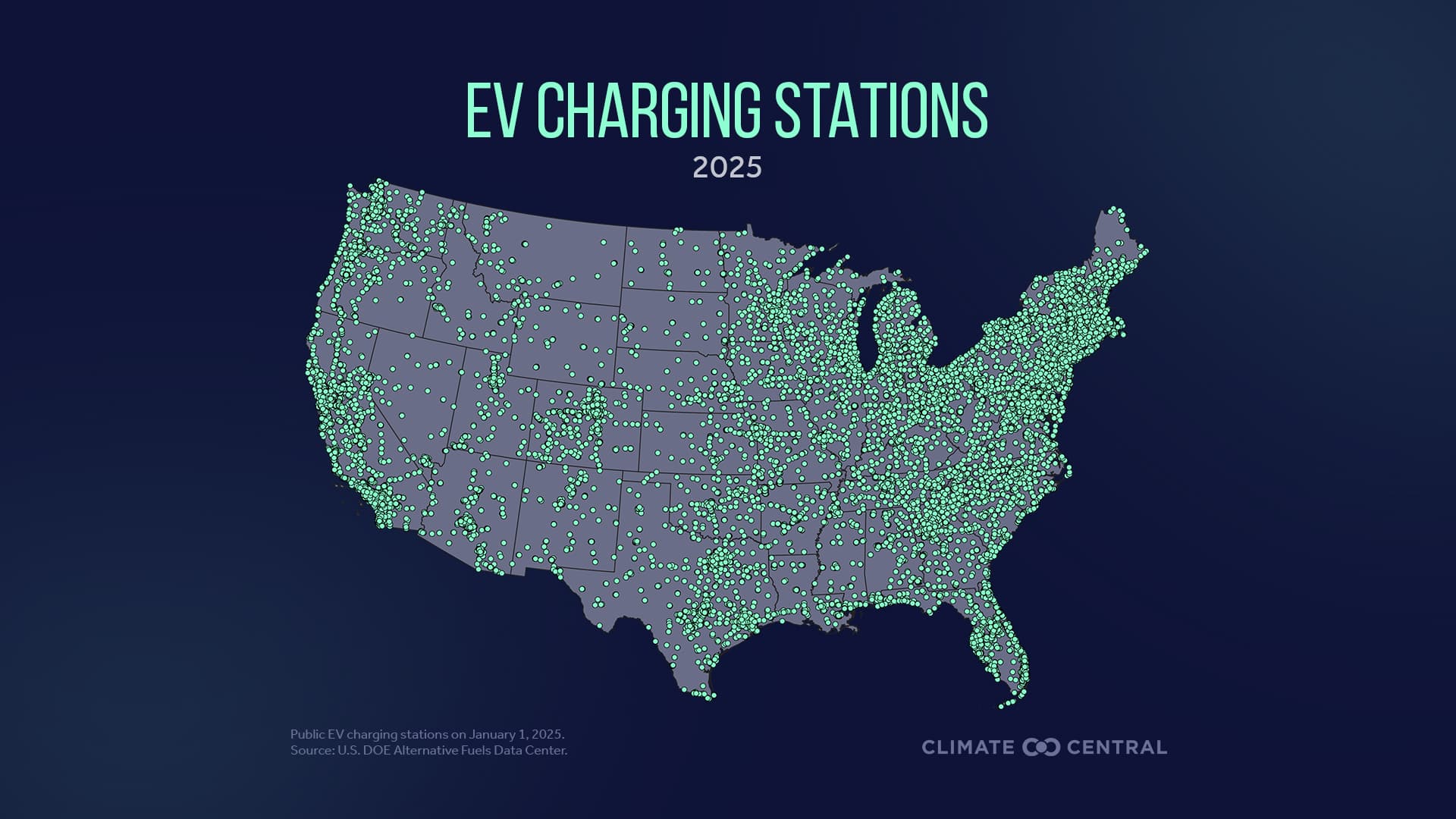
WASHINGTON — The charging perception gap may finally be narrowing on paper. We have all been inundated with EV ads, and friends with EVs touting their purchases and the ease of charging, but at least for myself, I always took these with a grain of salt. I pass at least four gas stations on my way to work every day, and maybe one charging station tucked in a lot, and that is giving grace. I have not actually seen one.
The U.S. Department of Energy Alternative Fuels Data Center now lists more than 250,000 public charging ports across roughly 80,500 station locations. That total includes more than 180,000 Level 2 plugs, north of 73,000 DC fast chargers, and a smaller number of Level 1 options.
The milestone is a whole-network number, not just the fast-charging scoreboard we tracked earlier this month. Level 2 growth is how apartment-adjacent drivers, workplace commuters, and overnight street parkers eventually get relief. Fast charging is how I-95 and I-5 survive family visits.
The port count passed 100,000 in April 2021 and cleared 200,000 in March 2025, which shows steeply compounding growth. That curve suggests that despite current politics, the build-out may still be electric. This year alone, the network has added more than 5,000 DC fast-charging points.
Tesla still leads fast-charger deployments with about 38,000 DC ports on the Supercharger network. The story is no longer monopoly scale alone. Ionna lists about 1,130 DC points across 120 locations. Rivian's Adventure Network includes roughly 1,000 DC chargers at 149 stations. ChargePoint remains the Level 2 volume leader with more than 76,000 plugs nationwide.
For Asian American suburban households comparing a Model Y, Ioniq 5, or RAV4 Hybrid, the practical read is not "problem solved." Dead stalls, idle fees, and adapter confusion still ruin weekends. The direction makes EV math harder to dismiss on corridor grounds alone, especially if your next car uses NACS natively.
Canadian readers should treat this as a U.S. inventory snapshot. Natural Resources Canada's verified station database listed about 33,800 public charging ports at roughly 13,000 locations as of March 2025, including about 27,500 Level 2 ports and 6,300 DC fast chargers. That is roughly one-seventh the U.S. port count for a population about one-ninth the size, so national averages look closer than corridor reality feels. Metro Vancouver and the GTA still run denser than much of the Prairies, while California and the Northeast still stack chargers faster than many Sun Belt interstates. Cross-border families planning Thanksgiving drives need separate maps for each country.
If you street-park or share a condo garage, total national port counts do not fix your stall. Our condo EV guide still applies. If you own a driveway and commute predictably, Level 2 growth is the quiet line item that changes monthly energy cost more than forum debates about peak fast-charging market share.
Map your actual routes in our EV versus gas road trip calculator. Then verify whether your household charges mostly at home, mostly in public, or mostly on panic stops before highway merges. The network is compounding. Your plug type and parking situation determine how much of that compounding belongs to you.