Pacific Northwest Charging Corridor Gets Infrastructure Investment
New funding aims to improve fast-charging access along I-5 and key routes between Seattle, Portland, and Vancouver.
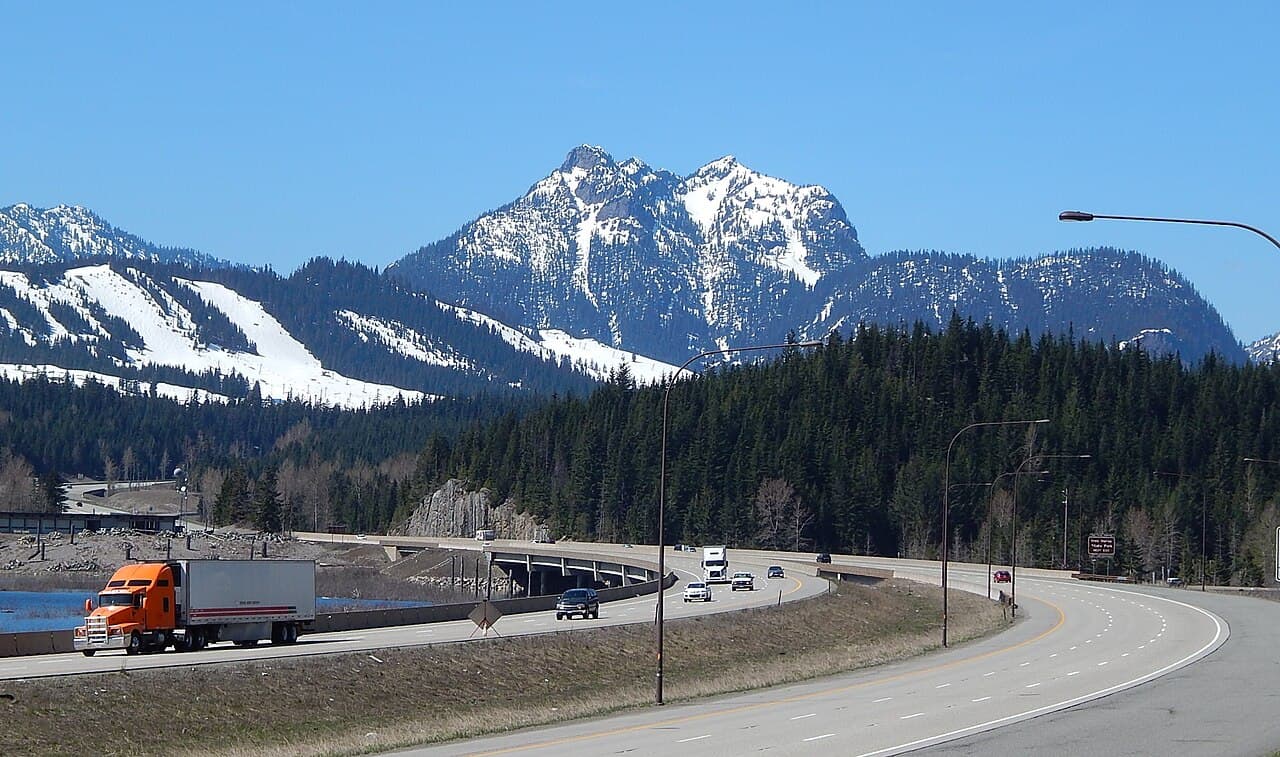
The Washington State Department of Transportation awarded $12.16 million in federal NEVI Round 1 funding for 14 new fast-charging stations with 96 ports along Interstate 90, US-97, US-195, and US-395, according to the Seattle Times. Recipients include Electric Era, Energy Northwest, EV Gateway, EVgo, and Tesla.
Stations must deliver at least 150 kW per port with a minimum of four ports per site, and all locations must be built within two years.
Several stations sit within 50 miles of the Canadian border, supporting cross-border travel on eastern Washington routes. Federal NEVI funds were initially withheld by the Trump administration and later restored after a lawsuit, allowing Washington to proceed with the awards.
WSDOT says Round 2 will target Interstate 5, Interstate 405, and Interstate 82 corridors.
The Round 1 focus on I-90 and eastern highway spokes addresses charging gaps on routes that connect Seattle to Spokane, Wenatchee, and border crossings east of the I-5 spine. Each station is required to meet federal reliability and accessibility standards as part of the national electric vehicle infrastructure program.
I-5 gets the attention, but Round 1 actually builds on I-90, US-97, US-195, and US-395.
For Asian American and Asian Canadian families who drive eastern Washington routes to visit relatives in Spokane, the Tri-Cities, or across the border toward Kelowna, 96 new fast-charging ports change the calculus on an EV road trip.
The Seattle-Vancouver run on I-5 is still the headline corridor, and Round 2 promises to address it, but eastern routes are where range anxiety has been loudest.
Stations within 50 miles of the Canadian border matter for households split between Surrey and Bellevue, or Richmond and Redmond.
Cross-border weekend trips are a fixture in Pacific Northwest Asian communities, and charging gaps on US-97 and I-90 have kept hybrid crossovers as the safe default.
Four ports minimum per station and 150 kW floors mean less queue anxiety when every family seems to travel on the same holiday weekend.
The federal funding fight is part of the story too.
NEVI money was withheld, then restored after litigation, and Washington moved fast once the dollars unlocked.
That political whiplash is worth remembering if you are planning around infrastructure that depends on federal programs.
The stations have a two-year build deadline, so the improvement is near-term, not a decade-out promise.
Round 2 adding I-5, I-405, and I-82 is the completion pass.
Until those awards land, PNW shoppers should treat this as real progress on eastern corridors and a down payment on the main spine.
For condo owners in Capitol Hill or Yaletown who want one car that handles both city commuting and a BC family visit, filling these gaps is how EV ownership stops feeling like a spreadsheet exercise.