
Car Week Began as a Forest Race. It Still Has Some Evolving to Do.
Forest racing created Monterey Car Week, then ended for good when Ernie McAfee hit a pine in 1956. The peninsula it left behind is about 3 percent Asian in Carmel, two hours from a San Francisco that is roughly one-third Asian. That gap has a paper trail.
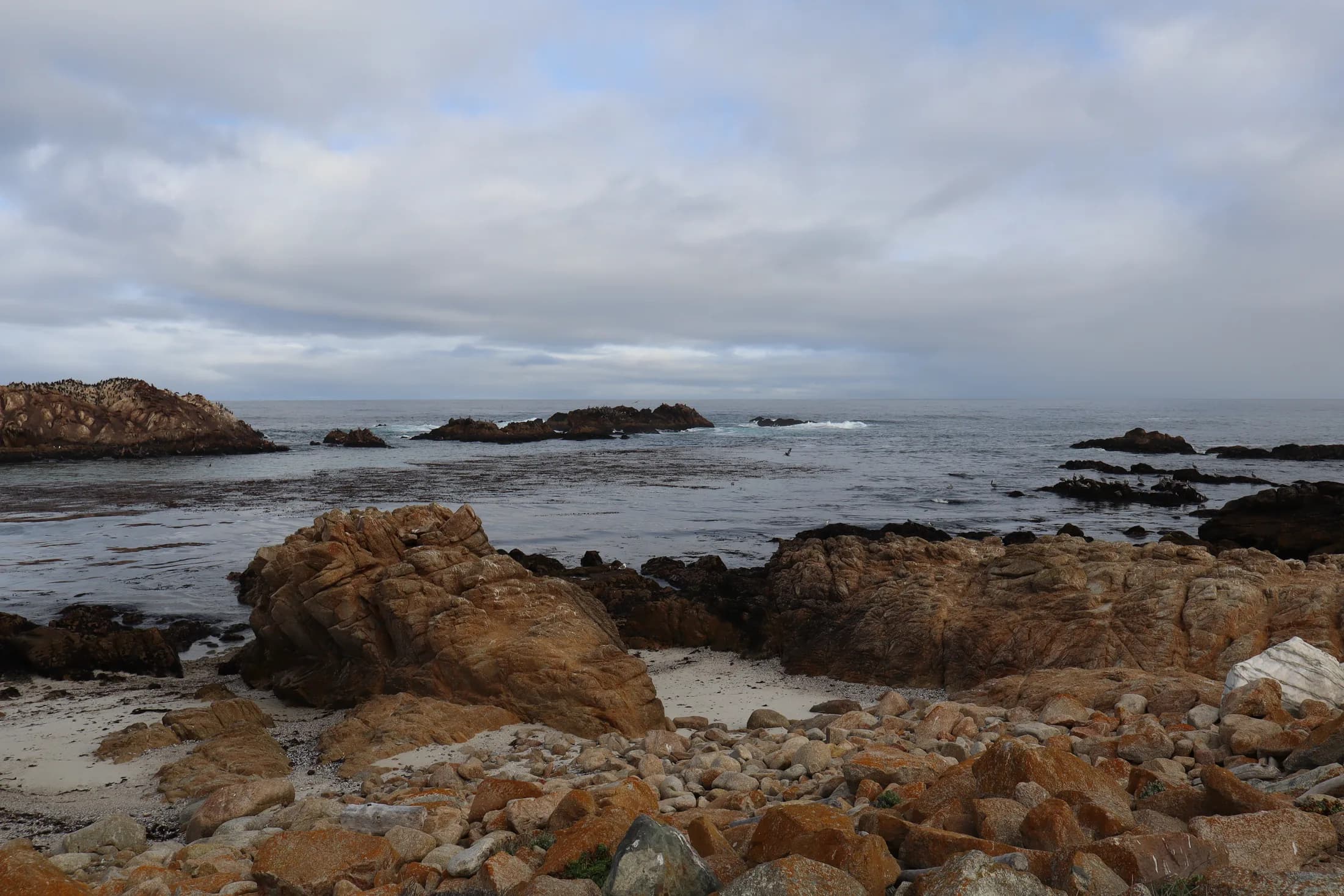
PEBBLE BEACH — Take 17-Mile Drive today and you get cypress, kelp beds, and gated golf. Seventy years ago those same forest roads were a race circuit. Hay bales and snow fencing stood between Ferraris and pines. The Concours was the side show.
That swap is how Monterey Car Week started. The peninsula learned twice that racing here ends when a driver dies. What stayed was a polished lawn, a track built inland, and a residential map that looks nothing like the Bay Area filling the hotels every August.
The first chapter ran beside the Hotel Del Monte, the Southern Pacific railroad resort that opened in 1880. A circular track went up in 1895 for horses, then automobiles, and from 1903 through 1907 race meets drew drivers down from San Jose. On September 21, 1907, Roy Rehm overturned a Matheson when a front wheel broke and died instantly. The track era stopped.
Pacific Improvement, Southern Pacific’s land arm, owned the resort, 17-Mile Drive, and much of Pacific Grove. It also shaped who lived here. Fire destroyed the Point Alones Chinese fishing village, the largest Chinese fishing settlement in California, on May 16, 1906. The company fenced the site, blocked rebuilding, and evicted the last resident by 1907, the same years cars raced at Del Monte.
After World War II, sports-car fever came home with the GIs. In November 1950, San Francisco car builder Sterling Edwards persuaded Del Monte Properties to host a real road race through the forest. The course ran about 1.8 miles, later 2.1, over Portola, Forest Lake, and a slice of 17-Mile Drive.
Phil Hill, then 23, won the first Pebble Beach Cup in his own Jaguar XK120 and later became America’s first Formula 1 world champion. Bill Pollack took the next two in a Cadillac-powered Allard. Ken Miles, a British mechanic in Los Angeles, built and drove his own MG specials here. Carroll Shelby won the last Del Monte Trophy in 1956.
Speeds rose faster than the forest could forgive. On April 22, 1956, Ernie McAfee, who sold Ferraris from a Sunset Boulevard showroom and had run Mexico’s Carrera Panamericana three times, clipped a straw bale approaching Turn 6 and slid into a pine. He died on impact. Jack McAfee, no relation but a close friend, finished third that day.
Within a year, local enthusiasts formed a racing association, leased dry-lake ground at Fort Ord, and built Laguna Seca in roughly sixty days for about $125,000. Some 35,000 people came to the first race in November 1957. The Corkscrew kept the racing. The 18th fairway kept the elegance.
The geography still surprises Asian American drivers making the two-hour run from San Francisco, a city that was about 34 percent Asian alone in the 2020 Census. Carmel-by-the-Sea was about 3 percent Asian and nearly 87 percent non-Hispanic White.
Price and age explain part of the rest. Carmel’s median age is near 69 and its median home value sits at the Census survey’s $2 million top code. Del Monte Forest and Pacific Grove run a few points higher on Asian share, still nowhere near the Bay.
The peninsula did not reach those numbers by accident. Deed restrictions once barred Chinese and other buyers of color from Pacific Grove property, and Carmel spent a century selling itself as an artists’ colony for people with time and money. In May 2022, Pacific Grove’s council voted unanimously to apologize for the 1906 burning and the racism around it, deeds included.
This August, the week looked more like the freeway than the census tract. Laguna Seca made Japanese motorsport the Reunion’s featured marque. Concept lawns filled with EV prototypes. Concours Village crowds mixed languages and badges you rarely see on Ocean Avenue in January.
Whether those visitors become residents is a longer bet than whether they keep buying tickets. Housing, age, and a century of branding do not move because auctions go multicultural for a week. Still, this is how many Asian American households first meet this coast. The open question is whether the crowd filling the grandstands changes what the peninsula feels like after the tents come down.
For the 75th Concours’s racing classes, start with our road-racing roots note. Pair it with the Monterey Peninsula car-culture guide, the Japanese motorsport Reunion story, and the Car Week EV weekend.