
Chinese Cars Are No Longer a Side Note in Europe
Chinese brands sold more cars in Europe through July than in all of 2025, and hit a record 11.2% share that month. The surge is hybrids and SUVs as much as pure EVs, with Chery’s Jaecoo and Omoda helping push the group near BYD and MG.
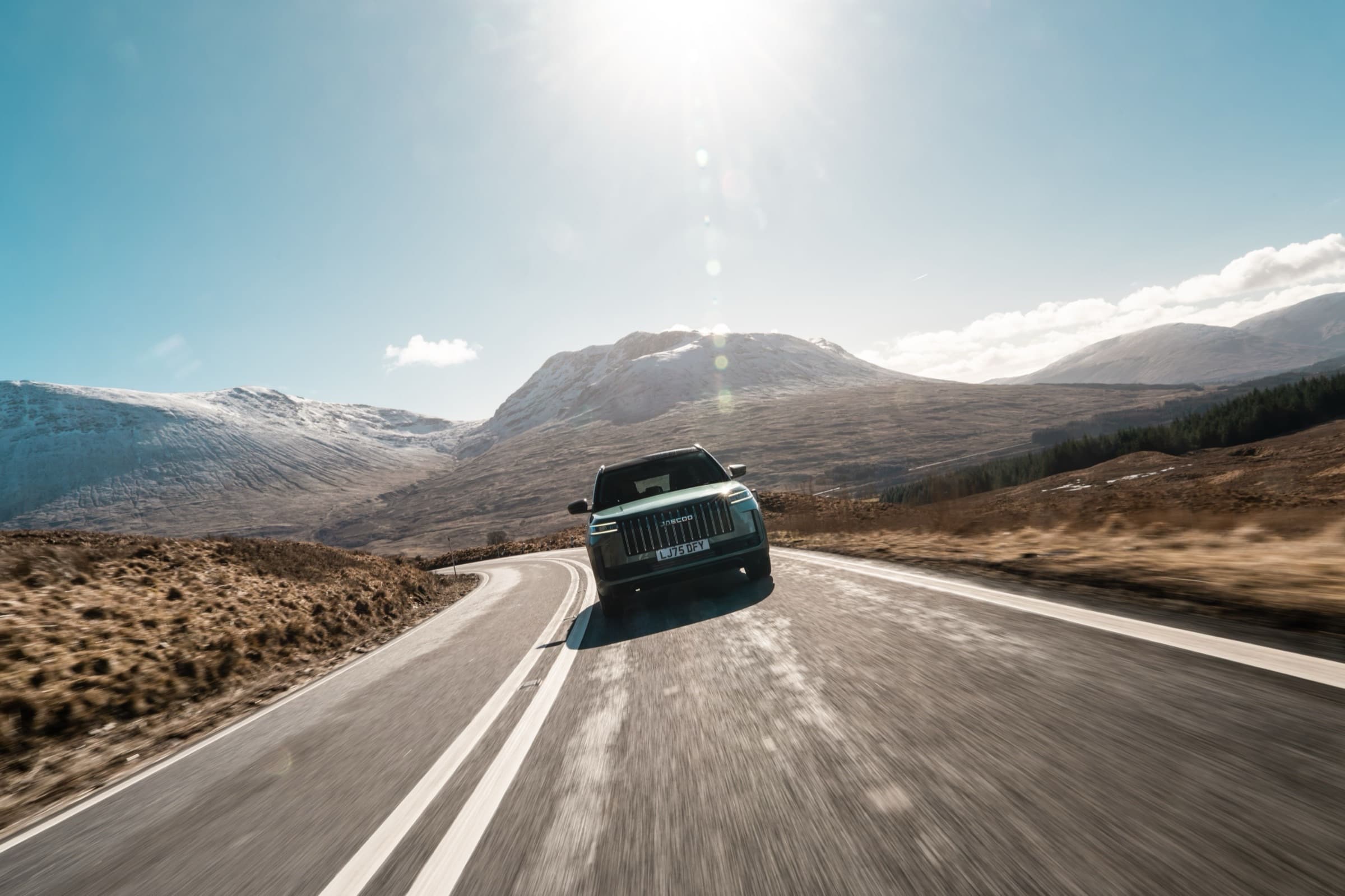
BRUSSELS — For years, Chinese cars in Europe were easy to file under interesting-on-paper. You could go weeks without seeing one on a main street.
That stretch is over.
Preliminary Dataforce figures covering about 98% of registrations across the EU, UK, Iceland, Norway, and Switzerland show Chinese brands sold 813,096 cars from January through July 2026. That already tops the 812,452 they registered across all of 2025. July alone carried a record 11.2% market share, almost double the 5.6% of July 2025. Europe’s whole market is expanding; Chinese brands are simply expanding faster.
Look at the mix alongside the headline share. In July, Chinese-brand plug-in hybrids jumped 201% to 42,220 units and took about a third of those brands’ registrations. Full hybrids climbed 137% to 24,129. Battery-electrics still rose hard, while petrol-only Chinese models fell and slipped to about a tenth of the Chinese-brand mix.
Tariffs help explain that shape. Since November 2024, the EU has layered anti-subsidy duties on many Chinese-built battery EVs, on top of the standard 10% import tariff. Those duties can add as much as 35.3%, depending on the company. Plug-in and conventional hybrids have largely sat outside that wall. Dealers, for now, are selling a lot of hybrid SUVs with Chinese badges and European price sheets.
Chery’s Omoda and Jaecoo pair shows how fast the volume can move. Through July, Dataforce put the wider Chery group (Chery, Omoda, and Jaecoo) at 201,544 European sales, up 283% year over year and within a few thousand of BYD (205,451) and SAIC’s MG-led tally (208,009). In the UK alone, Omoda and Jaecoo logged 52,828 registrations in the first half of 2026. Jaecoo’s 7-series SUV sits in the same adventure-crossover lane Europe already buys from Korea and Germany.
BYD remains the clearest pure-scale story, closing hard on longtime Chinese volume leader MG. Leapmotor’s Stellantis link is another route: grow through a European partner’s plants and dealers. Local production is the longer hedge. Chery has begun building at the old Nissan Barcelona site, BYD’s Hungary plant is due to start assembly late this year, and other assembly deals are how companies try to keep selling if the tariff wall moves again. Brussels is also considering extending duties to Chinese-built plug-in hybrids.
For American and Canadian readers, Europe is where these badges are proving dealer density, hybrid-versus-EV mix, and how quickly a new nameplate becomes ordinary in a mature market. Watch the powertrain mix as closely as the brand list. When Chinese volume runs through hybrids, trade policy and the driveway purchase end up on the same page.
If you are sorting electrified ownership costs at home, start with our hybrid versus EV monthly calculator and the hybrid comeback guide. For the wider adoption argument, see why the world already chose electric while America argues and how VinFast got huge in Vietnam.