
How VinFast Got Huge
In under a decade, Vietnam’s VinFast flipped a Toyota-and-Hyundai market into an electric one it dominates. The playbook was conglomerate money, a charging blanket, cheap mini-EVs, and a tax code that made battery cars the easy buy.
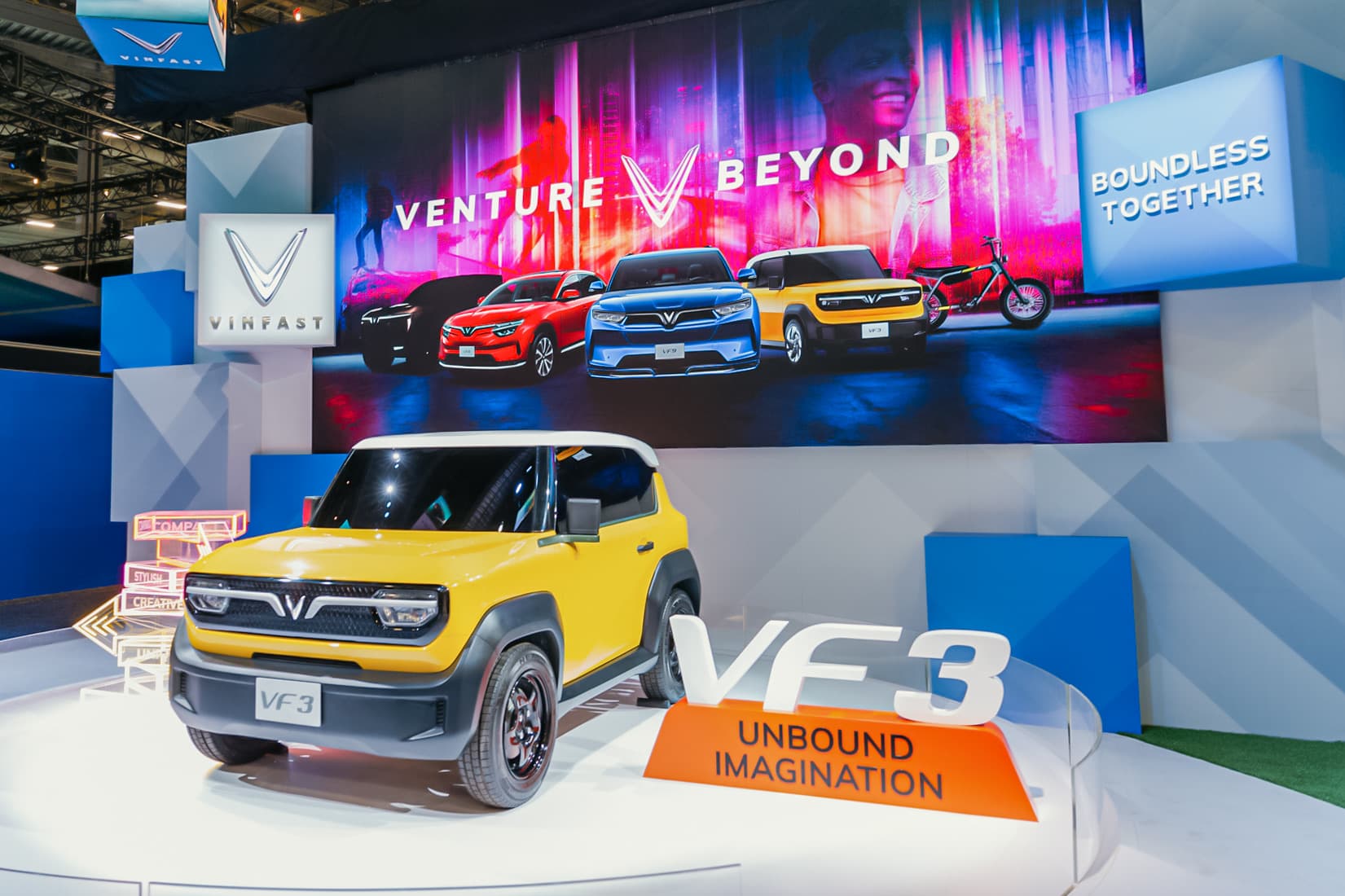
HANOI — Nine years ago VinFast did not exist. Today more than one in three new cars sold in Vietnam carries its badge, and that badge is electric. On a lot of monthly charts, the top five looks like a company brochure.
Call it a conquest.
The brand sits inside Vingroup, the sprawling conglomerate built by Phạm Nhật Vượng, Vietnam’s richest man. VinFast started in 2017 on gasoline cars, put its first EV on sale in 2021, and by late 2022 had shut down the combustion line. Most startups talk about an electric future. VinFast deleted the past on purpose.
Early volume leaned on a blunt corporate trick. Business Times, working from VinFast’s filings, called it “I buy first, you buy later.” Affiliates and fleets, especially the Xanh SM electric taxi business, soaked up cars so V badges filled the streets before strangers trusted the brand. In 2023, related parties took about 72% of car deliveries. By the first half of 2025 that share had fallen to about 22%. Retail caught up once the cars already looked normal.
Charging arrived with the same force. V-Green, another Vượng-backed arm, runs the plug network. VinFast says the system now tops 150,000 ports across 34 provinces and cities, with free public charging used as a long customer lure. Range anxiety is a harder argument when the charger sits on the way to a mall you already visit.
Then came the price floor. The VF 3 mini EV, listed in Vietnam around the low $11,000s depending on trim and month, became the little box that knocked long-dominant Japanese and Korean nameplates off the monthly No. 1 slot. Compact crossovers and commercial people-movers like Limo Green filled the other gaps. Scooters did the rest of the street work.
The scoreboard followed. In 2025 VinFast delivered a record 175,099 cars in Vietnam and finished near 36% market share. Through the first half of 2026 the share was still 35.3%. July alone brought 21,781 Vietnam deliveries, with the VF 3 back on top.
Policy helped. Battery-electric cars get a 0% first-registration fee that the government has extended through 2030, plus special consumption tax rates far below gasoline cars. In a market this price-sensitive, that thumb on the scale still matters.
None of this makes VinFast a finished global giant. The company still leans on founder and Vingroup capital while it chases break-even. The American chapter has been thin inventory, a shrinking dealer map, and a North Carolina factory that never became the story VinFast sold in 2022. That is a different piece.
The Vietnam story is clearer. A national champion spent like a state, built the chargers, seeded the fleets, priced a tiny EV for first-time car buyers, and rode a friendly tax code until retail demand did the rest. Toyota and Hyundai still sell plenty of cars there. They no longer own the plot.
If you want the ownership-cost side of the EV bet, start with our hybrid versus EV monthly calculator and charging at condos and apartments. For the bigger map of who is already living in an electric majority, see why America is still arguing while the world moved on.