
Vision BMW Alpina Previews Life After Alpina Became a BMW Brand
At The Quail, BMW’s one-off Vision BMW ALPINA argues for speed with composure after Alpina joined the Group. The useful question is what Buchloe eccentricity survives corporate stewardship.
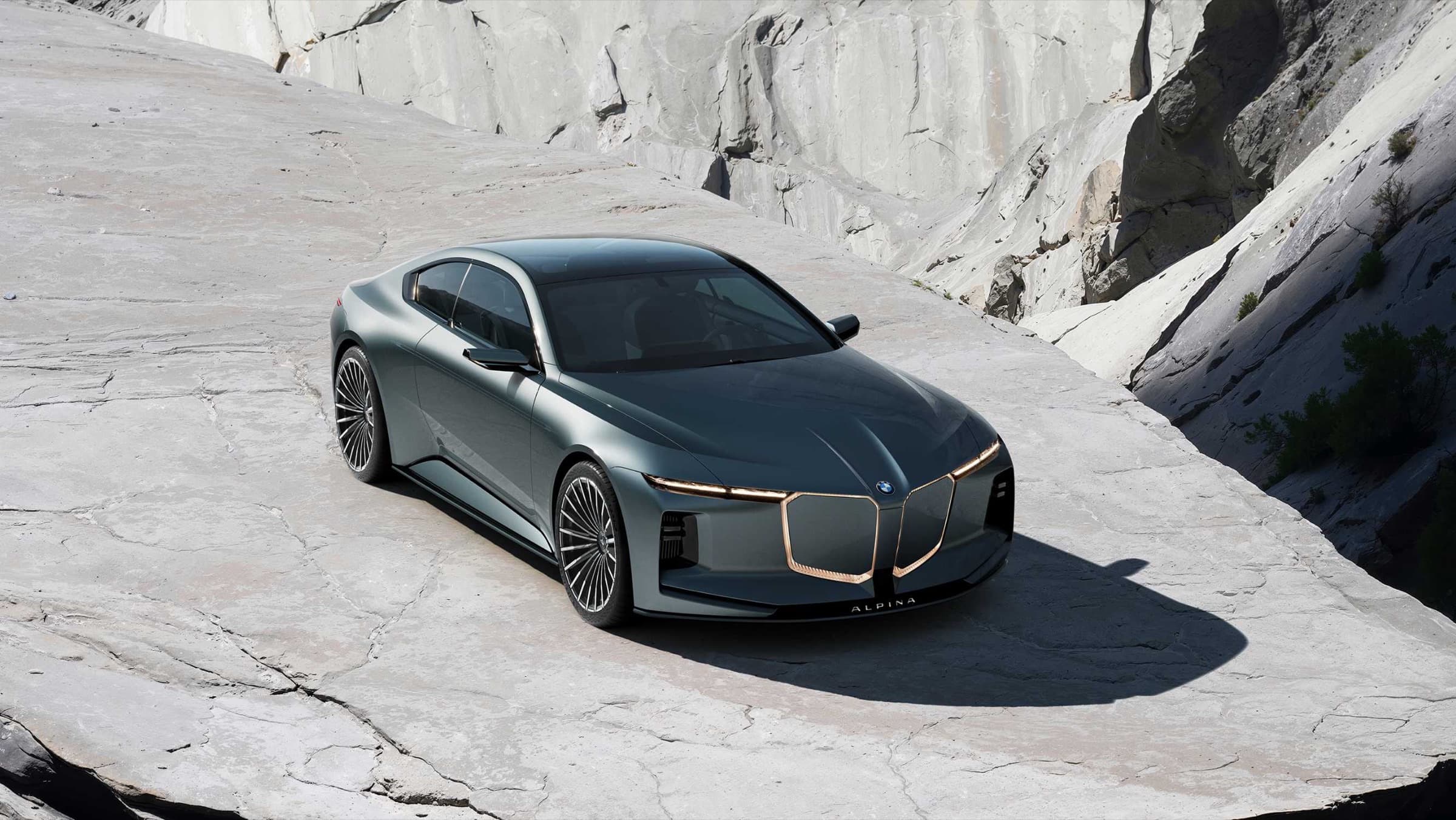
CARMEL VALLEY — Alpina spent decades as the quiet alternative to M: same Munich bones, different temperament. Now the badge sits inside the BMW Group, and Monterey is where the company shows what that means in metal.
The Vision BMW ALPINA makes its North American debut Friday at The Quail, A Motorsports Gathering, with a press conference at 11:25 a.m. at the BMW ALPINA stand. It first appeared at Italy’s Concorso d’Eleganza Villa d’Este, then lands Sunday on the Concept Lawn at the 75th Pebble Beach Concours.
This is not another M preview. The all-electric BMW M Concept Neue Klasse already covers that beat elsewhere on the peninsula. Vision BMW ALPINA is the other argument: a long, low coupé about 5,200 millimeters in length, V8 soundtrack included, built to look fast while still seating four adults in real comfort.
BMW ALPINA became an exclusive brand within the BMW Group when trademark rights transferred on January 1, 2026, after a 2022 agreement that kept Buchloe building cars under the old cooperation through 2025. Oliver Viellechner, head of BMW ALPINA, says the brand fills a portfolio gap between BMW and Rolls-Royce. The first production model arrives next year, inspired by the 7 Series but meant to read as unmistakably ALPINA.
What BMW says it is preserving is the philosophy Burkard Bovensiepen founded in 1965: speed and comfort as complementary ambitions, not a trade-off. The press language leans on endurance racing lore. While rivals stripped weight, Bovensiepen added seat padding because a comfortable driver is a faster driver. That idea survives here as Comfort+, a setting beyond standard BMW comfort calibration, plus hallmark cues collectors already know: deco-lines, 20-spoke wheels in the lineage that dates to 1971, and an elliptical four-pipe exhaust.
What may get sanitized is the independent-tuner weirdness that made old Alpinas feel hand-finished rather than portfolio-managed. Adrian van Hooydonk, head of BMW Group Design, talks about preserving distinctiveness and shaping it for a contemporary context. Maximilian Missoni, who leads design for midsize and luxury cars and for BMW ALPINA, describes a “Second Read” aesthetic: details that reward a closer look without shouting.
Crystal controls, a self-deploying glass set behind the rear console, and a Panoramic iDrive interface painted in heritage blue and green are beautiful. They are also very BMW Group.
That is the useful split for Asian American and Asian Canadian buyers who treat Alpina the way some households treat a quiet first luxury step: parent-approved speed without M theater. M sells edge, lap times, and a willingness to be loud. ALPINA sells effortless capability: high-speed composure over long distances, a softer primary ride, and craft details that do not need a track day to justify the payment.
If you’re at Quail Friday, look past the shark-nose sculpture and ask the practical ownership questions. How much of Buchloe’s small-series personality remains when the cars are activated as a Group luxury brand? Will Comfort+ still feel like an Alpina when the next 7 Series-based model arrives in 2027? Does “speed, refined” still leave room for the eccentric paint and cabin commissions that made older cars feel personal?
Pair the debut calendar with our Monterey Car Week week guide and The Quail event page. For how Car Week already stacks luxury platforms, keep the modern Concours luxury-platform note nearby.
BMW did not buy Alpina to build another M. It bought a temperament. Monterey is the first North American test of whether that temperament survives the wordmark.