
Magarigawa Is Where Japan’s Supercars Finally Get to Stretch
Cornes carved a members-only Tilke road course into the hills of Minamiboso so Japan’s Ferrari and Lamborghini owners have somewhere legal to use the cars they already bought.
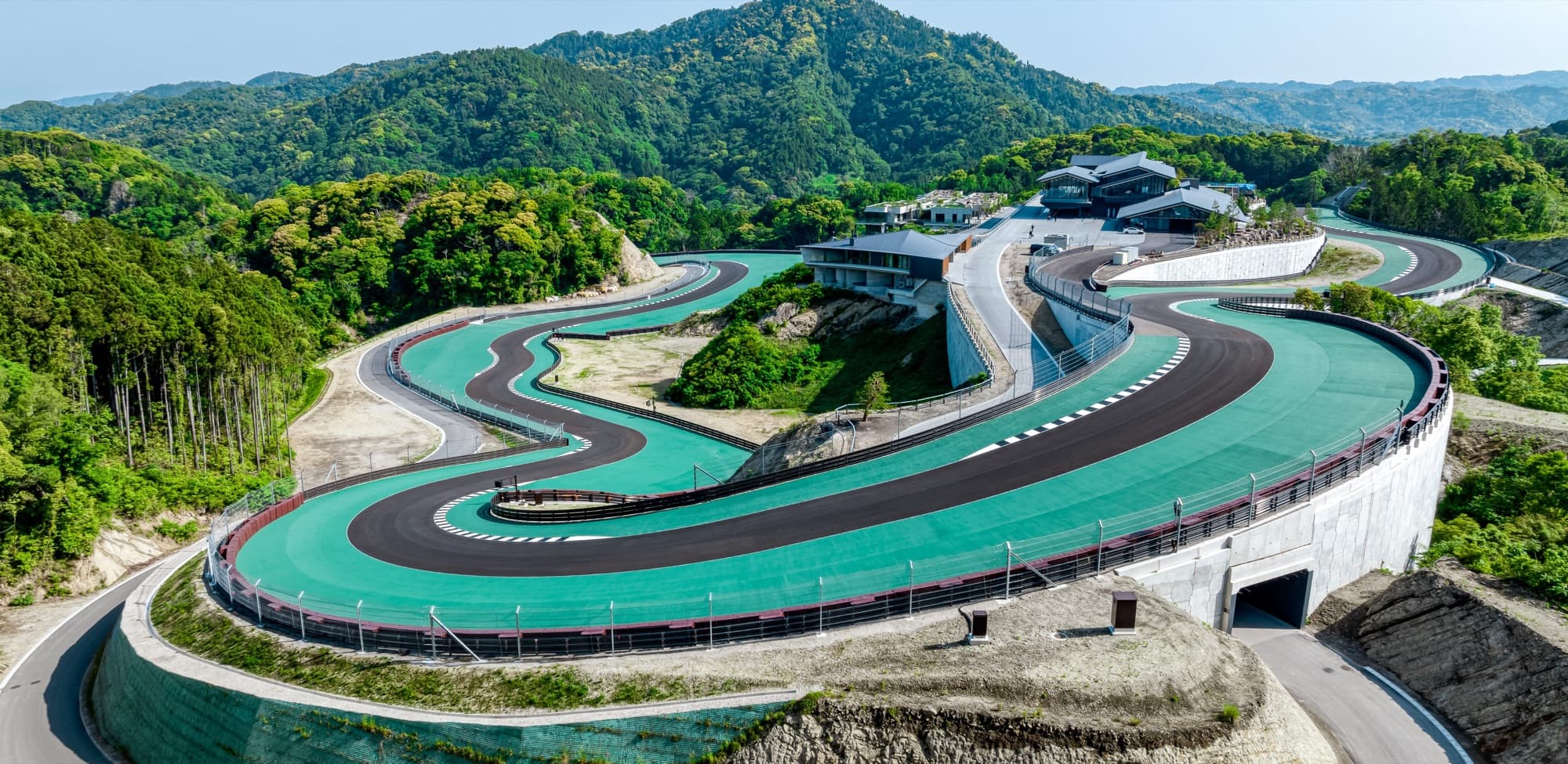
MINAMIBOSO — Japan sells some of the world’s fastest street cars into one of its least forgiving driving maps. THE MAGARIGAWA CLUB is what happens when that mismatch gets rich enough to buy a mountain.
The club sits in Minamiboso, Chiba, about an hour southeast of central Tokyo and roughly 75 minutes from Narita. A 3.5-kilometer road course loops the clubhouse: 22 corners, an 800-meter straight, climbs near 20 percent, descents near 16 percent.
On a clear day the sightlines swing from Tokyo Bay toward Mount Fuji. Cornes opened the place on July 29, 2023, after cutting a previously untouched Boso Peninsula ridge into a private ribbon that Top Gear compared to Jurassic Park with a racetrack.
Kenzo Watari, CEO of Cornes & Company, had already named the problem. Where do you drive an 800-horsepower supercar in Japan?
Public roads punish you. Public circuits book out, police the wrong tire compound, and turn a free Tuesday into a queue. Cornes sells Ferrari, Lamborghini, Porsche, Rolls-Royce, and Bentley through its Tokyo showrooms. Magarigawa is the missing half of that sale.
Membership buys climate-controlled storage for hundreds of cars and a staffed workshop. The pit hall is air-conditioned and feels closer to a ski lodge than a paddock shed. The clubhouse adds deep-well onsen water, an infinity pool, spa, gym, family lounge, and villas that look straight down onto the track.
The club sells private lapping, not race weekends. The layout is narrower than a modern Formula 1 circuit on purpose, so members stay on their own driving instead of hunting passes. Motorcycles are out.
Full memberships are capped near 500 and do not expire. Associate seats top out around 750 on five-year cycles. Around opening, Asahi put regular initiation near 36 million yen plus about 220,000 yen a year, with more than 200 people already waiting.
Robb Report later counted roughly 400 members, about 80 percent Japanese and the rest from elsewhere in Asia, Europe, and the United States. Forbes put the build near 35 billion yen on a multi-decade patience clock.
For Asian American and Asian Canadian readers who grew up on touge videos and now insure a used 911 in California or Ontario, the price is not the story. The diagnosis is.
The mountain road used to be the classroom. Magarigawa is what you build when the classroom cars outgrow the public mountain: secure parking, helipad arrivals, lunch while a Valkyrie sets a club record, and a Tilke layout that teaches weight transfer without a tunnel camera at the exit.
You can taste a cheaper version of that itch without a Chiba initiation. Monterey Car Week starts August 7, and WeatherTech’s Japanese motorsport reunion at Laguna Seca is the public stack.
Start with our Japanese motorsport reunion note, the Rolex Monterey Motorsports Reunion page, and this week’s Car Week eve preview. Keep F1’s return to Sepang nearby if the Asia calendar pulled you in.
Magarigawa will not fix your commute. It shows why Japan’s quiet money stopped pretending a canyon run was enough.