
Britain's Best-Selling Car Came From China. It Still Had a Gas Tank.
Chery's Jaecoo 7 topped UK new-car sales in September, ahead of the Tesla Model 3. Chinese brands took nearly a quarter of the market. What British buyers actually chose was less pure EV than a plug-in hybrid SUV they could live with.
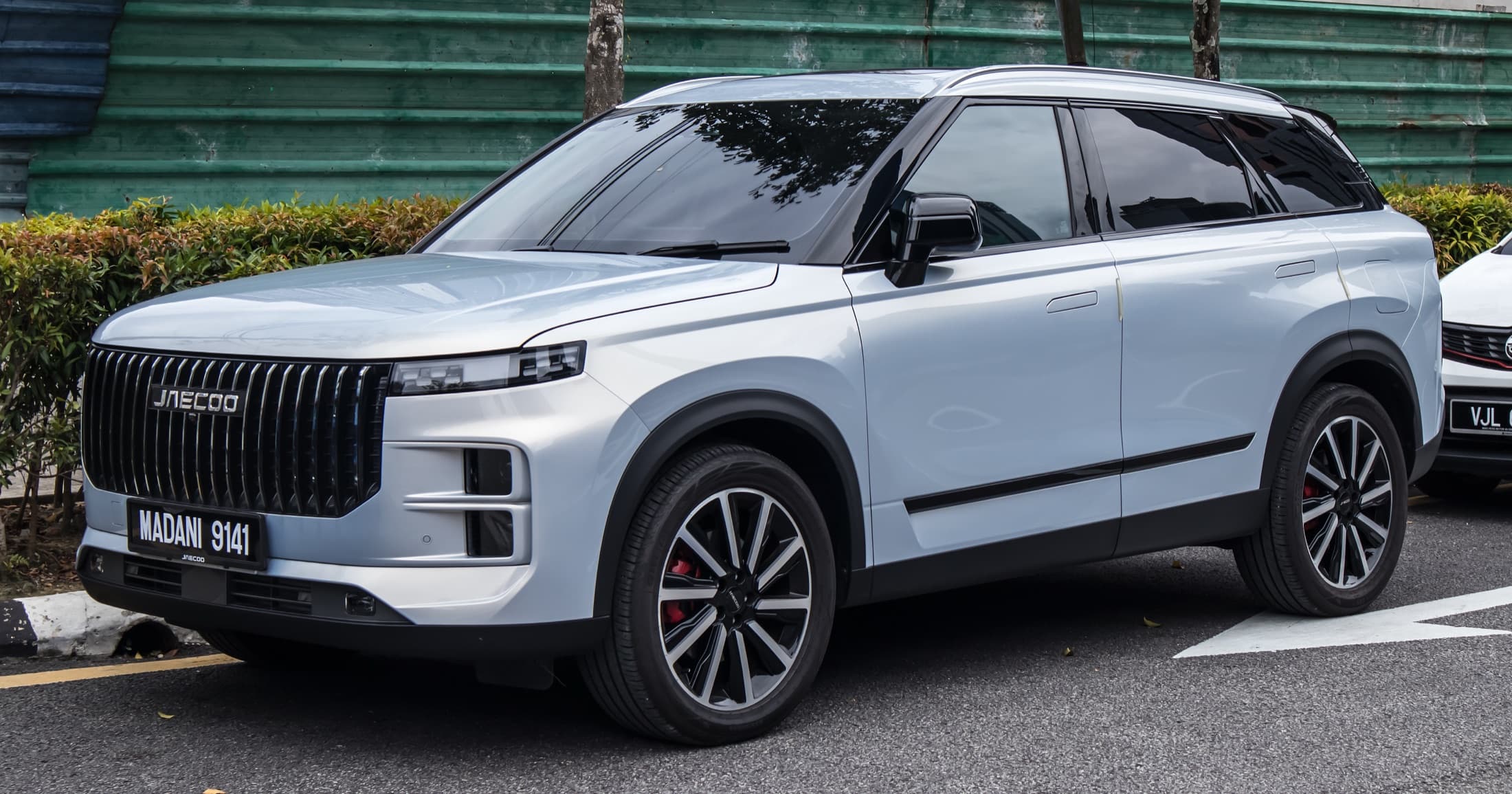
LONDON — Two years ago, Jaecoo was a name most British drivers had never said out loud. In September, its 7 crossover was the country's best-selling new car.
The industry body SMMT counted 10,813 registrations for the month, enough to clear the Tesla Model 3 and the Ford Puma. It was the second plate-change month this year that the Chery-built SUV finished first, after March. Through September it sits second for the whole year, right behind the Puma. On British roads that already feel crowded with familiar badges, that is a short climb.
From the United States, it is tempting to file this under Chinese EV takeover. Jaecoo is Chinese, yes. The 7 that people are buying is mostly not a pure electric car. Shoppers can choose petrol or plug-in hybrid, and the plug-in hybrid has done the heavy lifting. You still fill a tank. You can also run on battery for shorter trips. For a lot of households, that is an easier ask than parking a Model 3 outside a terrace house with nowhere to charge.
Sister brands Omoda and Jaecoo tell the same story. About three-quarters of their September registrations were electrified, but most of that was plug-in hybrid. Battery-only cars were roughly a tenth of the mix. The SUV that beat Tesla still carried gasoline as a backup plan.
Around them, Chinese brands took about 23 percent of the UK market last month. BYD finished as the second-best-selling brand overall, behind only Volkswagen. Omoda and Jaecoo more than doubled their September from a year earlier, 22,296 cars and a 6.37 percent share.
In two years they have passed 100,000 cumulative UK sales and built out to 146 retailers. Victor Zhang, who runs the dual brand in Britain, put it simply: they are no longer newcomers. The next job is turning a sprint into something that lasts.
September always helps anyone ready for it. Britain changes the age letter on license plates then, and households that were waiting finally buy. Brands that arrive with a sharp price, a loaded SUV, and a powertrain that does not demand a new lifestyle tend to win. Plug-in hybrids jumped hard across the industry. Battery EVs rose too. The car at the top of the chart was still a Chery crossover people online joke about as a "Temu Range Rover": the look of something richer, the payment of something ordinary.
For Asian American and Asian Canadian households, this is closer to home than the headline suggests. Europe has already been shifting toward Chinese hybrids and SUVs, not only pure EVs. Canada is opening a controlled door. The United States mostly is not. Jim Farley, Ford's chief executive, has been warning that Chinese cars will hit the affordable end of the market first. Britain's September sheet is what that looks like when the door is open. A new badge stops being a curiosity and starts being the car next to you at the supermarket.
You still cannot walk into a U.S. dealer and order a Jaecoo the way you can a CR-V or Tucson. You can watch what British buyers did when price, range anxiety, and a new Chinese name all showed up in the same month. A lot of them chose the plug-in hybrid.
If you are sorting hybrid, plug-in, and battery options for a North American driveway, our hybrid versus EV monthly calculator and hybrid comeback guide are built for that. The UK chart is not a shopping list for Americans. It is a reminder that "Chinese car" and "pure EV" are not the same sentence.