
Honda Will Enter 2027 Without a U.S. Battery EV
After the 2026 Prologue, Honda has no battery-electric passenger model lined up for U.S. showrooms. Remaining inventory can sell into early 2027 while hybrids take the product budget.
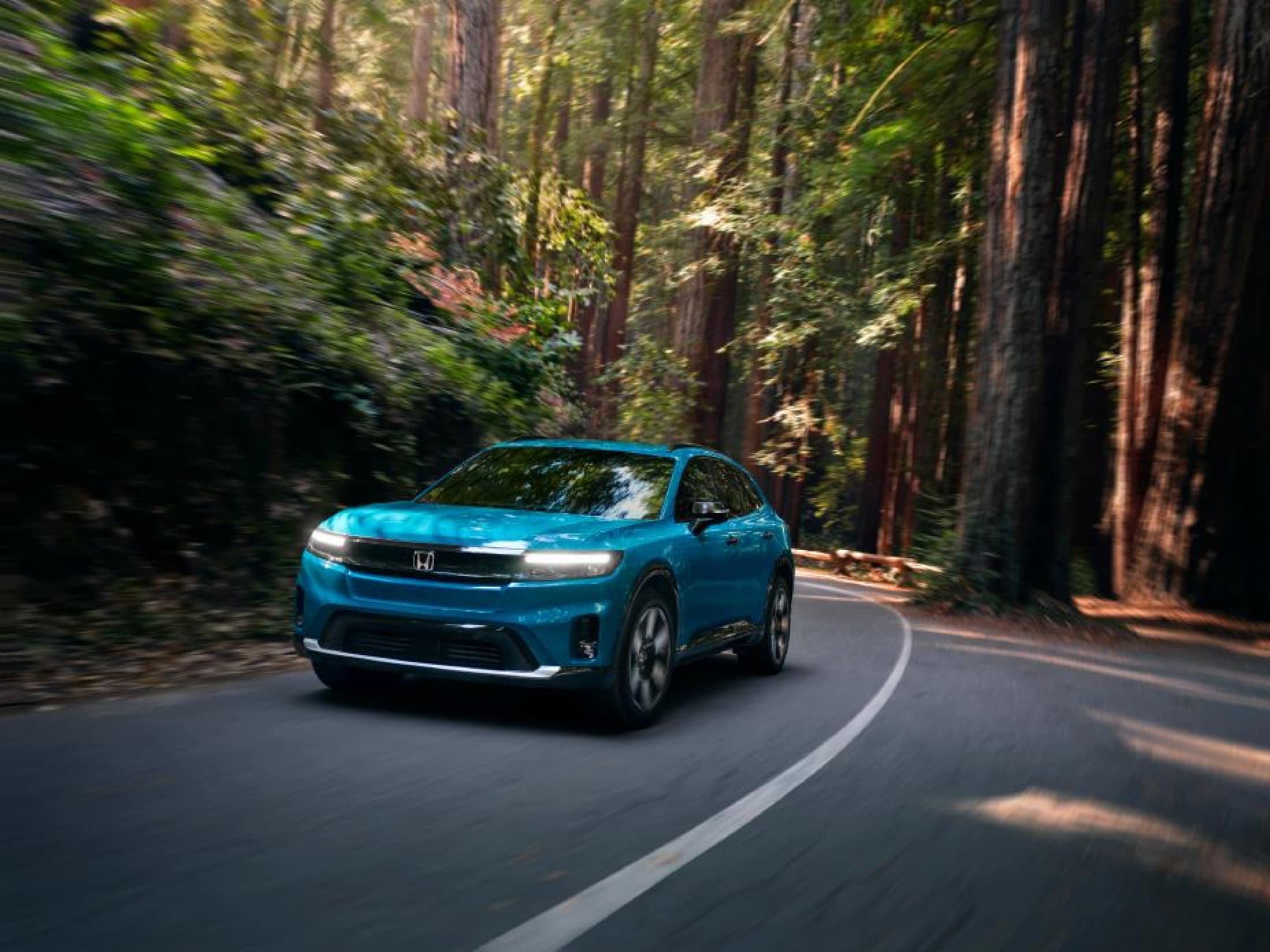
TORRANCE — Honda’s U.S. battery-electric chapter is closing with an empty shelf, not a sequel.
Honda has confirmed that Prologue sales end after the 2026 model year. Remaining stock can keep moving into early 2027, and the company says current owners will keep dealer service, parts, and warranty coverage. What it has not announced is a Honda-branded battery EV to replace the Prologue in American showrooms for 2027.
That is the household headline. The badge that sold Civics and CR-Vs for a generation will ask electric shoppers to wait, switch brands, or buy a hybrid instead.
The Prologue was never Honda’s long-term EV architecture. It was a bridge: Honda styling and cabin work on General Motors Ultium hardware, built at GM’s Ramos Arizpe plant in Mexico alongside cousins such as the Chevrolet Blazer EV. Acura’s related ZDX already left. The Honda 0 SUV, Honda 0 Saloon, and Acura RSX that were supposed to bring an in-house Ohio EV story north were canceled in March. When the last new Prologue VIN finds a driveway, the U.S. Honda and Acura passenger lines go battery-electric quiet.
Sales explain the timing better than slogans. The Prologue moved 33,017 units in 2024 and 39,194 in 2025. Through June 2026 it added 8,407 more, down about 49 percent from the same stretch a year earlier, for roughly 80,600 U.S. sales since launch. Respectable for a late-arriving EV. Far short of the 70,000-a-year ambition Honda floated before the market cooled and the federal new-vehicle credit stopped applying after September 30, 2025.
Honda’s product money is now pointed at hybrids. A May business briefing framed a next-generation hybrid wave, with North America as the center of gravity and the first of those models expected in 2027. Fifteen next-generation hybrids are planned globally by the fiscal year ending March 2030. Ohio capacity talk has shifted toward gasoline and hybrid builds. That matches what Asian American and Asian Canadian Honda households already see on lots: CR-V Hybrid and Accord Hybrid inventory that still makes condo and apartment math pencil when Level 2 is a board fight.
If you are mid-Prologue shopping, treat the closeout as a worksheet, not a clearance carnival. Confirm the stock number, the remaining warranty clock, insurance on the exact trim, and whether any connected-service pricing changes after the model exits. Our earlier note on Honda ending the Prologue after 2026 covers the confirmation and owner-support language. The July statement blurb that told some Prologue customers to consider a hybrid next was awkward marketing, not a parts warning, but it telegraphed the same roadmap.
A discounted Prologue can still be rational. 2026 two-wheel-drive EPA range ratings still reach about 308 miles on paper, and a Honda dealer network beats orphan-brand anxiety for many first-EV buyers. Just price the whole ownership stack: payment, insurance, home or public charging, and resale after the badge stops arriving new. Run hybrid versus EV monthly, public versus home charging, and the used EV buying guide before you nod at a closeout payment.
If the shortlist was always CR-V Hybrid versus an electric three-row fantasy, stop waiting for Honda to refill the BEV bay this model year. Settle the CR-V versus RAV4 debate, check EV versus hybrid for Asian American drivers, and keep charging at condos and apartments honest.
Honda did not abandon electrification worldwide. It abandoned the idea that the next U.S. chapter had to be another expensive battery SUV on a partner’s platform. For American shoppers, 2027 starts with hybrids doing the volume work and the Prologue living on as inventory, CPO, and service appointments.