
Audi’s New Flagship Is a Three-Row Built for America
The 2027 Q9 starts at $89,095 and the SQ9 at $119,395 — Audi’s biggest SUV ever, U.S.-first, and aimed at GLS and X7 shoppers while the brand’s American sales keep sliding.
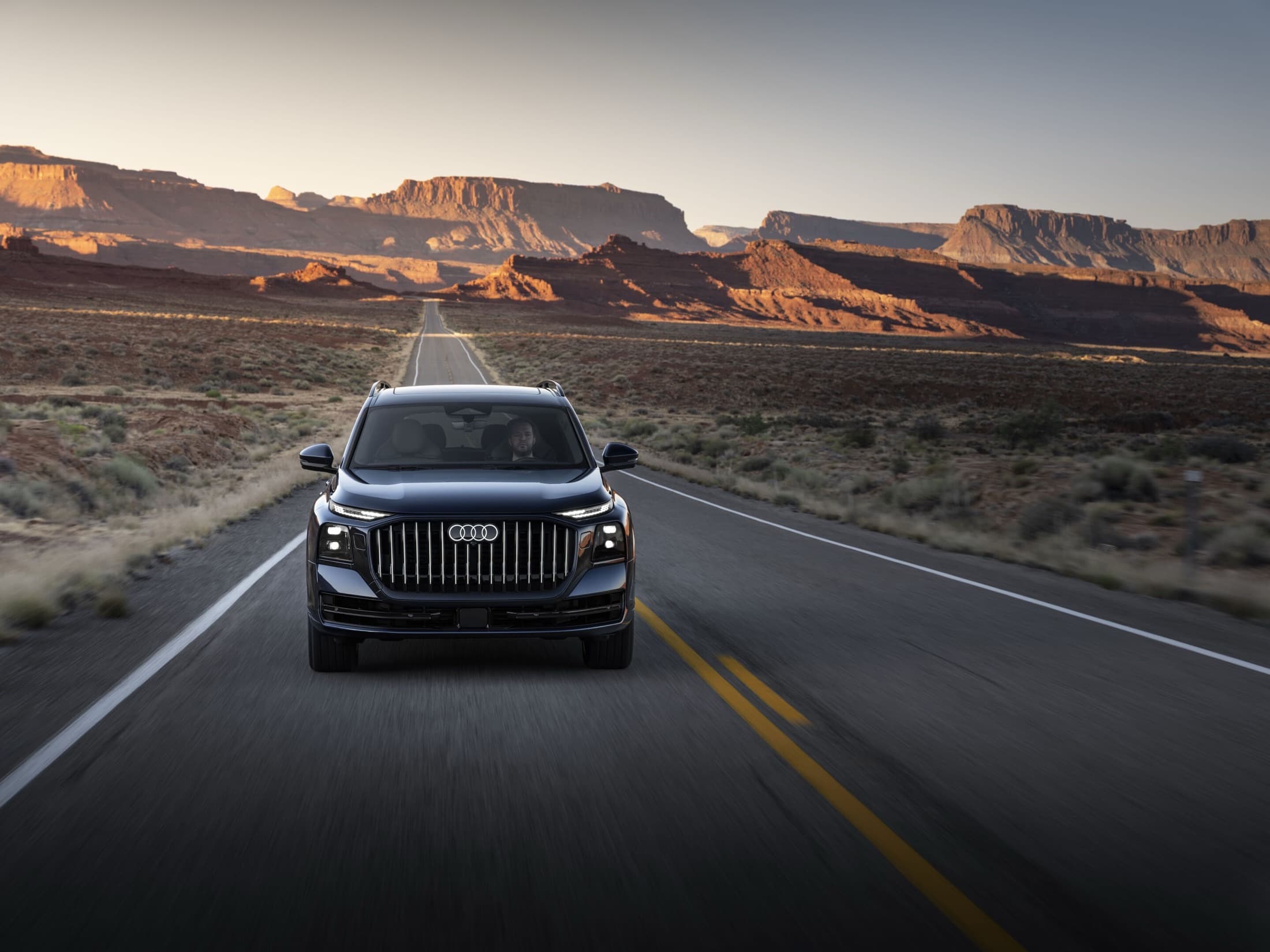
NEW YORK — Audi finally built the three-row its U.S. dealers kept asking for. Now the hard part is whether a flagship sticker can outrun tariffs.
In New York on July 28, Audi unveiled the 2027 Q9 and SQ9 as the brand’s new full-size flagships — larger than the Q7, North America first, and aimed squarely at households shopping a Mercedes-Benz GLS or BMW X7. Pricing starts at $89,095 for the Q9 and $119,395 for the SQ9, including destination on the base figure cited across launch coverage. U.S. showrooms are due in the fourth quarter of 2026.
Filip Brabec, Audi of America’s senior vice president of product management, framed the brief in American grocery-run language: performance, space, and technology, with six- and eight-cylinder engines and cupholders sized for the commute. Audi CEO Gernot Döllner told preview audiences that U.S. requirements sat at the center of development, and that a full-size SUV was the loudest dealer request in North America. About two-thirds of Q9 production from Bratislava is expected to head to this continent.
The hardware matches the pitch. The Q9 uses a twin-turbo 2.9-liter V6 with 429 horsepower and a claimed 4.9-second run to 60 mph. The SQ9, a U.S.-focused performance trim Europe will not get in the same form, swaps in a twin-turbo 4.0-liter V8 with 591 horsepower and a claimed 3.8-second sprint. Both pair an eight-speed automatic with quattro all-wheel drive and a 7,700-pound tow rating. Overall length is about 209 inches — longer than a GLS or X7, short of a full Escalade — on a roughly 123.5-inch wheelbase, with adaptive air suspension and adult-usable third-row claims.
Trim math matters for Asian North American first-luxury households. Car and Driver’s launch table puts Q9 Premium Plus at $94,695 and Prestige at $103,795, with the SQ9 as a single $119,395 package. Those are MSRPs before the options Audi interiors usually collect. Run insurance on the exact configuration before the panoramic roof and power doors feel like free upgrades.
The sales context is why this reveal is not just another badge night. CNBC, citing company data, says Audi’s U.S. volume fell 16% in 2025 and another 17% through the first half of 2026, with a 30% drop in the first quarter. Audi points to tariffs and the end of federal EV incentives. Unlike BMW and Mercedes, Audi still imports every U.S. vehicle — a structural disadvantage when policy favors local production. New metal can fill a showroom. It does not erase a tariff line on the worksheet.
If your household is climbing into three-row German luxury, treat the Q9 as a real shortlist entry beside GLS, X7, and well-equipped Lexus or Genesis alternatives — then price the whole stack. Start with our first luxury car guide, the best cars for multigenerational households brief, and shop auto insurance before you buy. Pair any payment with the car affordability calculator and the lease versus finance calculator.
A U.S.-first flagship is Audi admitting where the profit sits. Your job is still the out-the-door number, not the reveal stage.