
How America's Trade War on Canada Is Wreaking Havoc on the Auto Industry
Trump wants 50 percent duties on Canadian cars and parts on January 1. Parts already bounce across the Detroit River. Shoppers are already paying more.
DETROIT — The bill for America's trade fight with Canada is already on U.S. window stickers. It gets larger on January 1 if Washington follows through.
President Donald Trump announced on August 24 that tariffs on Canadian cars, trucks, auto parts, and steel will rise to 50 percent on the first day of 2027. That doubles the 25 percent top-line duty now on the books.
The threat landed after a new trade deal fell apart in Washington. Canada answered on September 8 with retaliatory tariffs of 15, 25, and 50 percent on about $20 billion of U.S. goods.
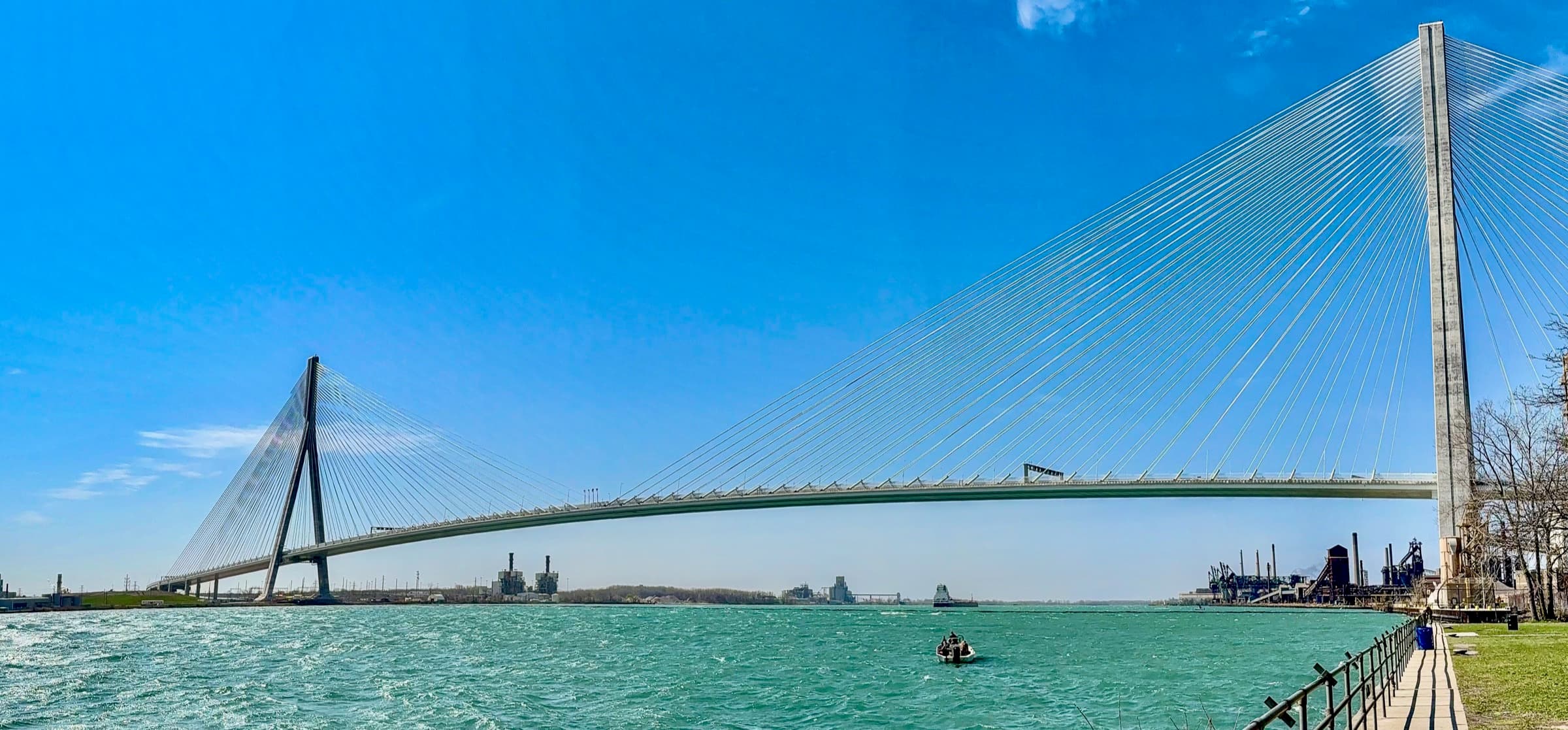
The cars still move across the Detroit River. Parts roll over the Ambassador Bridge and the Gordie Howe International Bridge, the new crossing that opened July 27. The first commercial truck over Howe was carrying auto parts into Michigan.
Flavio Volpe, president of Canada's Automotive Parts Manufacturers' Association, has said a single component can cross seven or eight times before it is bolted into a finished vehicle. He puts Canadian parts at 30 to 40 percent of what Michigan plants use.
Shoppers have already paid for the wider tariff year. Cox Automotive estimated imported vehicles were $5,000 to $8,900 more expensive. Even U.S.-built vehicles picked up $1,600 to $2,000, because steel, aluminum, and imported parts still move. A second jump on January 1 would sit on that higher base.
The United States-Mexico-Canada Agreement is still in force. Qualifying vehicles are generally charged the duty only on their non-U.S. content, not the full sticker. Qualifying parts have been exempt. If that relief dies with the 50 percent rate, the invoice gets much larger.
The Canada-built share of U.S. sales has already slipped. Bill Rinna, vice president for the Americas at GlobalData Automotive, put it at 4 percent in the first half of 2026, down from 7 percent for full-year 2024.
Honda and Toyota take the worst of it. The two built 76.5 percent of Canada's vehicles last year. Canadian plants supplied about a quarter of Honda's U.S. sales and 17 percent of Toyota's.
Honda Canada chief executive Dave Jamieson said Alliston, Ontario, already sends about three-quarters of its Civics and CR-Vs to the United States. Honda has said it may have to raise U.S. prices if there is no new deal, and that it may change course on an eighth North American plant.
Ford is not selling a Canada-built vehicle in the United States right now. It is still converting Oakville, Ontario, into a third Super Duty plant beside Kentucky and Ohio, and says that plan has not changed.
Stellantis already moved Jeep Compass production to Illinois after the first tariff wave and left Brampton idle. Windsor went the other way. It is the only plant that builds the Chrysler Pacifica, and Stellantis added a third shift there.
GM cut a third shift at Oshawa and idled Ingersoll after BrightDrop production stopped. If the 50 percent rate sticks, Rinna said it could in time "essentially end auto imports from Canada to the US." Moving those lines would take years.
Washington has a second auto fight this week. The Senate is trying to fast-track a permanent ban on Chinese vehicles while Trump hosts Xi Jinping. Ottawa still runs a limited window for Chinese-built EVs. A Civic or Pacifica on a U.S. lot this fall still prices off the Canada tariff.
If you're shopping now, price the car you can actually buy. Run the used versus new comparison before you treat a higher sticker as temporary. For a CR-V or RAV4, the hybrid premium explainer is the other check.
The Midwest ownership guide covers the plants and crossings on this side of the river. The trucks will keep rolling. Watch January 1.