
Mass-Market Cars Are Catching Luxury Brands in the Seat
J.D. Power’s 2026 seat study says mass-market brands now beat premium brands on seat satisfaction, with ventilation, memory, and massage migrating down from luxury cars. The Kia Sorento is one of five segment winners. Buy the adjustments you will actually use.
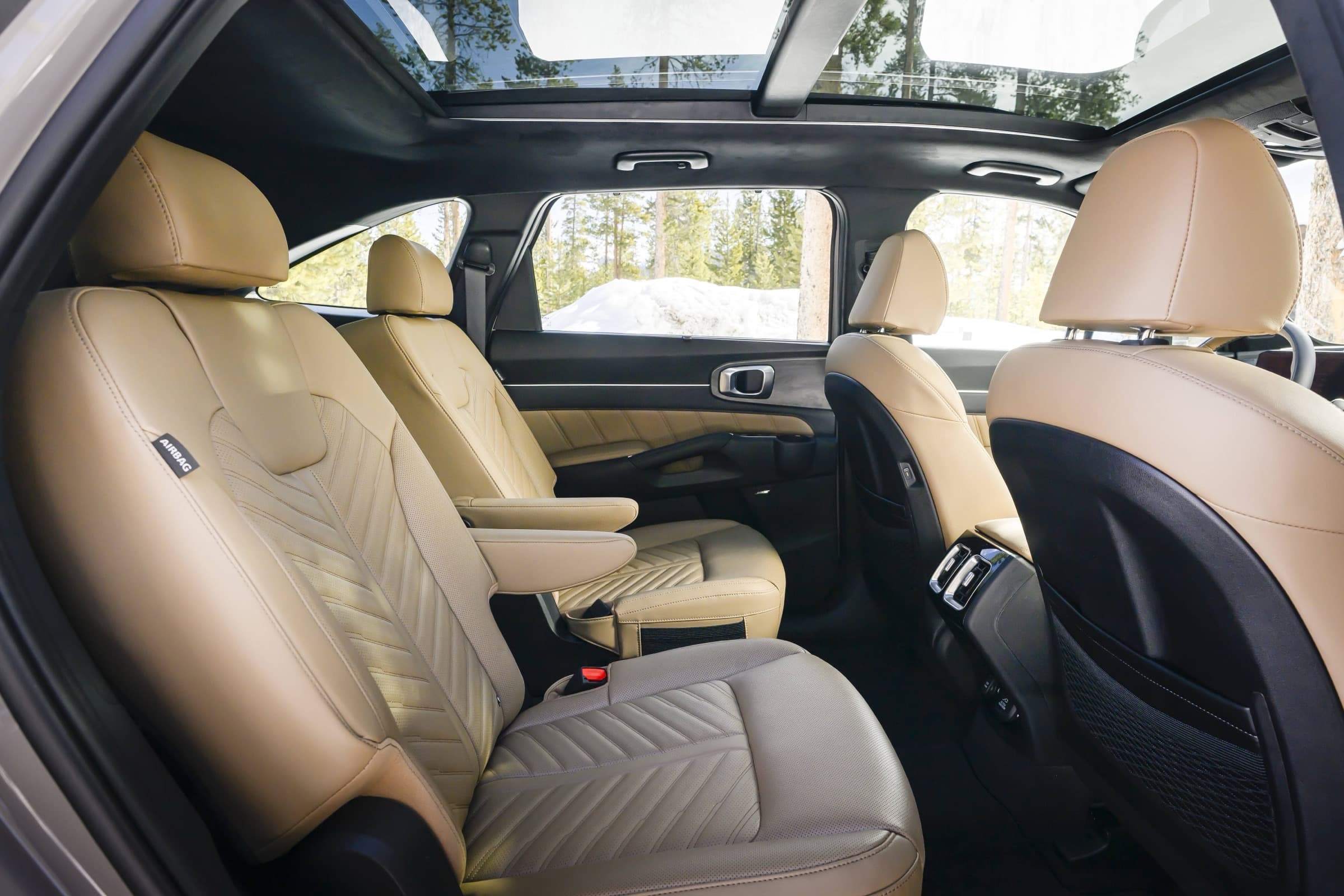
TROY — Luxury used to announce itself the moment you sat down. Heated, ventilated, power-adjusted chairs with memory were a real reason to stretch for a German lease. J.D. Power’s 2026 U.S. Seat Quality and Satisfaction Study says that reason is nearly gone.
The study surveyed 78,514 buyers and lessees of new 2026 model-year vehicles about their first 90 days. Seat quality is scored in problems per 100 vehicles, where a lower number is better. The industry improved by 0.9 this year, to 10.0 PP100.
The gap between premium and mass-market seats narrowed to 0.7 PP100, down from 1.3 a year earlier. Premium brands have now trailed mainstream ones on seat quality for five straight years.
Lisa Boor, who directs customer success for J.D. Power’s automaker business, gave the plain version: mass-market brands now outperform premium brands on seat satisfaction. She points at a shift buyers can see on any dealer lot, where memory settings and massage functions keep turning up in cars that were never meant to read as luxury.
That migration cuts both ways. J.D. Power credits this year’s gains to features that were integrated well. The other edge is that a seat with more motors has more to get wrong, and complicated controls have been a sore spot in both segments. A recliner used to be a lever. Now it can be a menu you hunt through at a red light with someone waiting behind you.
What counts as luxury seating in 2026 is a list you can work through in 20 minutes at the dealer. Power height, recline, and lumbar. Heat for a January commute. Ventilation for August in Houston or the Inland Empire. Memory if two people share the car. A headrest that does not push your chin toward your chest.
Massage is the one that photographs well and disappoints quietly. If you cannot find the control without the salesperson leaning across you, you will not be using it in year two.
The study’s mass-market segment winners double as a shopping list. Volkswagen Golf among small cars. Ford Mustang in midsize and large cars. Nissan Rogue in compact SUVs. Kia Sorento in midsize and large SUVs. Ram 1500 in trucks and vans.
The premium car winner was the BMW Z4, a two-seat roadster, which tells you how narrow the luxury advantage has become.
Trim still decides everything. The base Sorento’s bench is not the quilted captain’s chairs Kia puts in the brochure, and the ventilated front seats most families want usually sit a trim or two up the sheet.
For households weighing a Sorento, a Carnival, a Highlander, or a first Lexus, this is permission to stop treating the badge as a comfort score. If the badge still carries weight with parents or on the insurance quote, our first luxury car guide works through that conversation.
If the job is three-row comfort, start with the Asian family SUV shortlist and Carnival versus Sienna versus Odyssey. The affordability calculator will tell you whether the trim with ventilated seats is worth the payment.
One limit worth naming: this is a U.S. survey of the first 90 days, not a durability study, so it says nothing about how all those motors hold up in year six. Shoppers in the GTA and Metro Vancouver are seeing the same features arrive on Kia, Hyundai, and Toyota lots.
So take the 20 minutes. Sit in the exact trim, run every adjustment twice, and buy the seat that fits rather than the badge that implies it.