
Honda's Best-Selling SUV Just Quietly Became a Hybrid Default
From July through September, more than half of new CR-V buyers chose the hybrid version. Honda did not announce a culture war. Shoppers simply stopped treating the gas model as the automatic starting point.
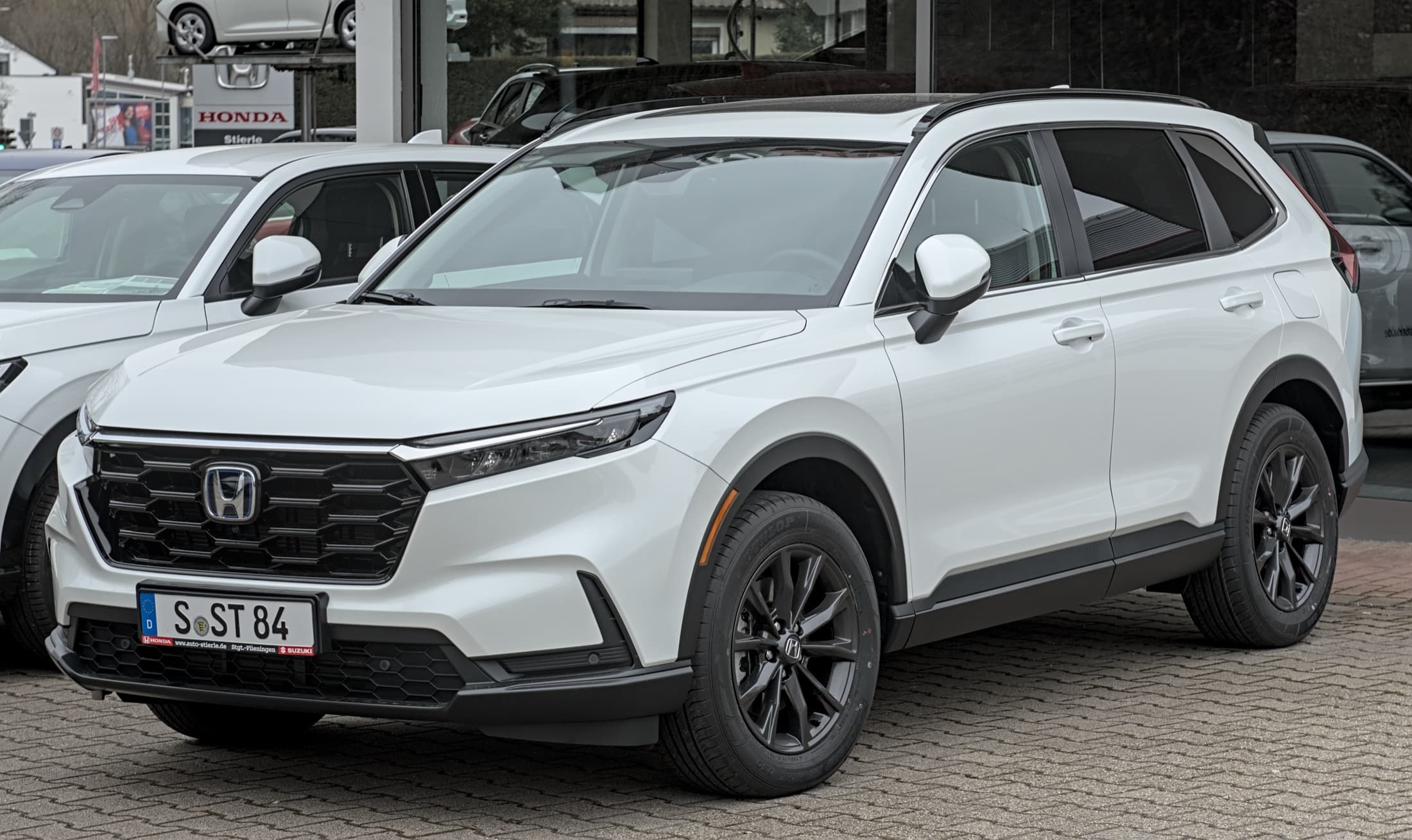
TORRANCE — Walk a Honda lot this fall and the old sales script starts to feel dated. For years the CR-V conversation opened with the gasoline model, then someone asked whether the hybrid was "worth it." Honda's newest numbers suggest a lot of buyers skipped that step.
From July through September, hybrids accounted for 53 percent of CR-V sales in the United States. Honda moved 59,668 of them in the quarter, a record for the hybrid version, while the full CR-V nameplate also set a quarterly high at 110,730. On the company's most important American SUV, the gas-electric version is no longer the special order. It is what most people drove home.
That matters because the CR-V is not a niche car. It is the family crossover households already put next to a Toyota RAV4 or a Hyundai Tucson when relatives start comparing payments after dinner. School runs, weekend Costco, a monthly number someone can defend without a whiteboard. When more than half of those buyers choose hybrid, the shift is quieter than a press slogan. People are not suddenly becoming EV households. They are picking the version that spends less at the pump without asking the building for a charger.
The car itself helps that decision along. A CR-V Hybrid still takes regular gas. Electric motors help in traffic and on short hops. For a lot of Asian American and Asian Canadian families already unsure about full electric timing, that is the whole appeal: better fuel use without turning ownership into a condo project.
Honda's wider numbers say the CR-V is not alone. Brand hybrid sales topped 106,000 in the quarter, the company's best third-quarter hybrid total. In September, hybrids were about a third of Civic sales and close to half of Accord sales. Lance Woelfer, Honda's U.S. auto sales chief, credited affordability and hybrids for a strong stretch: American Honda up 15.9 percent in September and 9.3 percent in the quarter.
The same report undercuts the victory lap. Key models sat at about 16 or 17 days of inventory. That is a thin lot. When demand runs ahead of supply, the choice on the floor shrinks before the monthly payment does. You can want the hybrid and still end up arguing over color, wait time, or the gas model that happens to be parked outside.
Toyota has been living this hybrid reality for years. Hyundai is spending heavily to build more hybrids in Alabama. Honda's news is narrower. Its volume SUV did not merely offer a hybrid. In the third quarter, the hybrid became the ordinary path.
If your household is still stuck on whether to "go hybrid," start with the cars you can actually find and the payments you can actually carry. Our RAV4 Hybrid vs CR-V Hybrid vs Tucson Hybrid guide and hybrid versus EV monthly calculator are for that work, not for cheering a chart.
Honda did not need a manifesto. The buyers already wrote one on the order forms.